


Face Cards Explained: Everything You Need to Know About Playing Cards
Waqas Khan Pitafi 2026-09-02 06:44:14
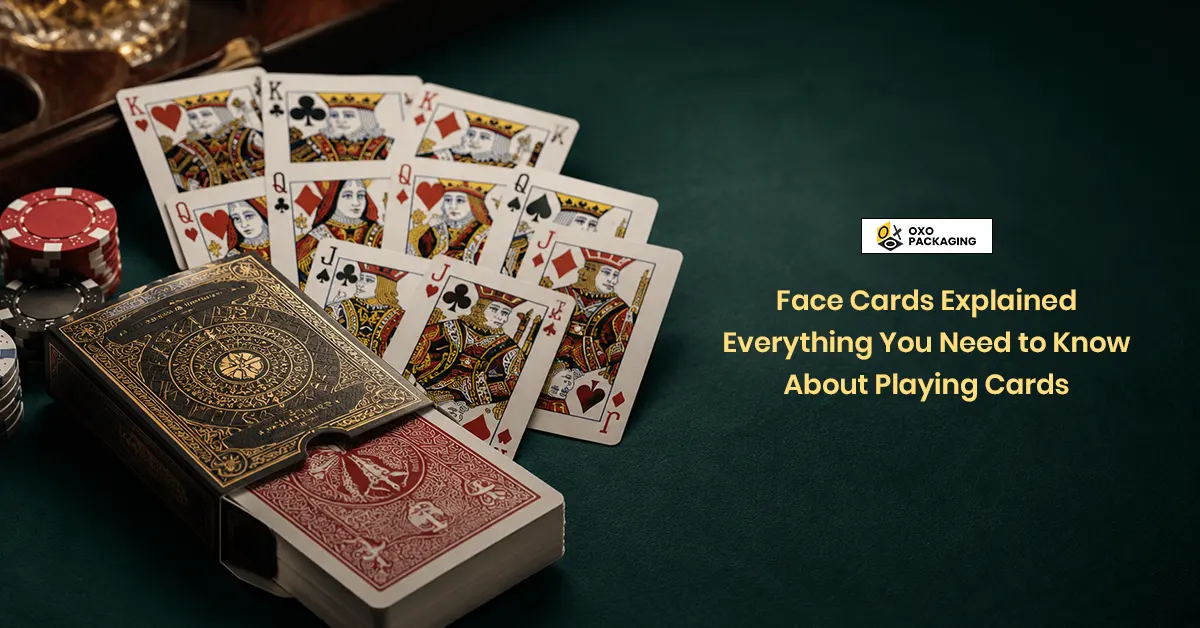
People are mostly curious about playing cards; however, they can’t understand how to play. A standard pack of playing cards contains 52 cards divided into four suits: hearts, diamonds, clubs, and spades. These cards are commonly stored and presented in specially designed playing card boxes, which help protect the deck while also providing an attractive and practical way to package cards.
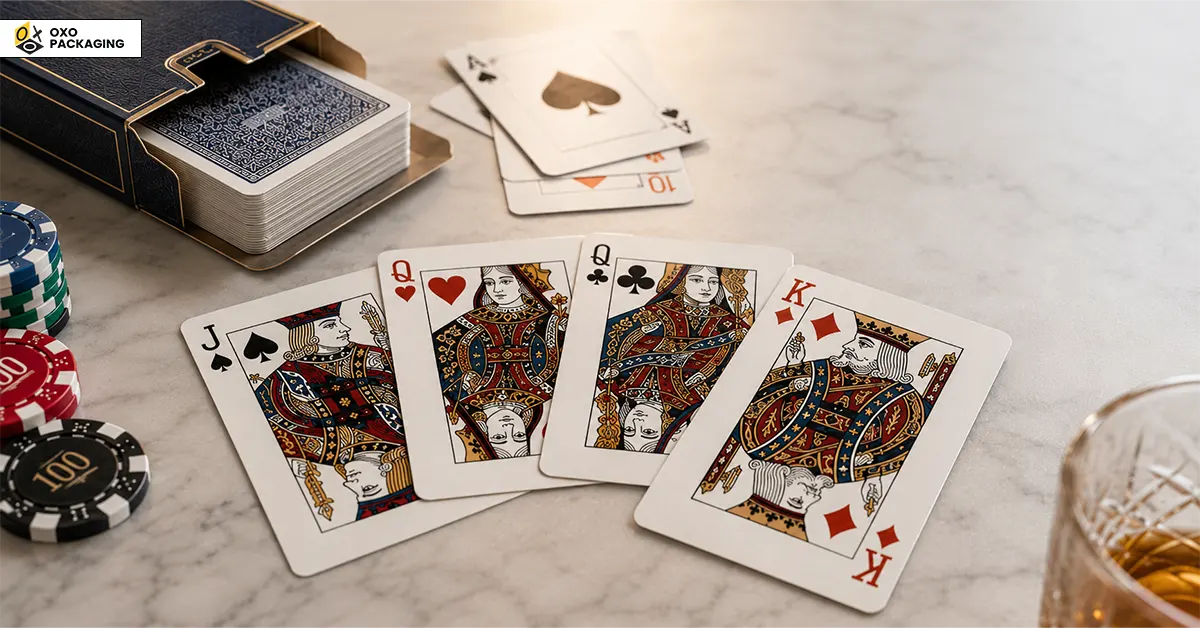
The 12 face cards consist of four jacks, four queens, and four kings. Each suit contains one card of each rank. Face cards are important in countless card games, from blackjack and poker to rummy and bridge.
Ready to master the world of playing cards? Discover the history, meaning and value of every jack, queen and king in our complete guide to face cards in a deck. Read on and become more confident in your next card game.
What Is a Face Card?
A face card is a playing card that displays a person rather than a number. The three face-card ranks are:
- Jack
- Queen
- King
Face cards are also called court cards, as they traditionally represent people within a royal court. They come along with other cards in playing card boxes. Their exact value depends on the game being played. In some games, they have numerical values, while in others their rank is more important than their points.
For example, in blackjack, every jack, queen, and king is worth 10 points. In poker, face cards are ranked above numbered cards but below the ace. In other games, such as rummy, face cards may carry penalty points if they remain in a player’s hand at the end of a round.
How Many Face Cards Are in a Standard Pack?
There are 12 face cards in a standard 52-card pack:
- Four jacks
- Four queens
- Four kings
The calculation is simple:
4 suits × 3 face cards per suit = 12 face cards
Face cards therefore make up approximately 23.1 per cent of the pack. This means that, when drawing one card from a well-shuffled pack, the probability of selecting a face card is 12 out of 52. This fraction can be simplified to 3 out of 13.
In percentage terms, the chance is approximately 23.08 per cent.
The Four Suits and Their Face Cards
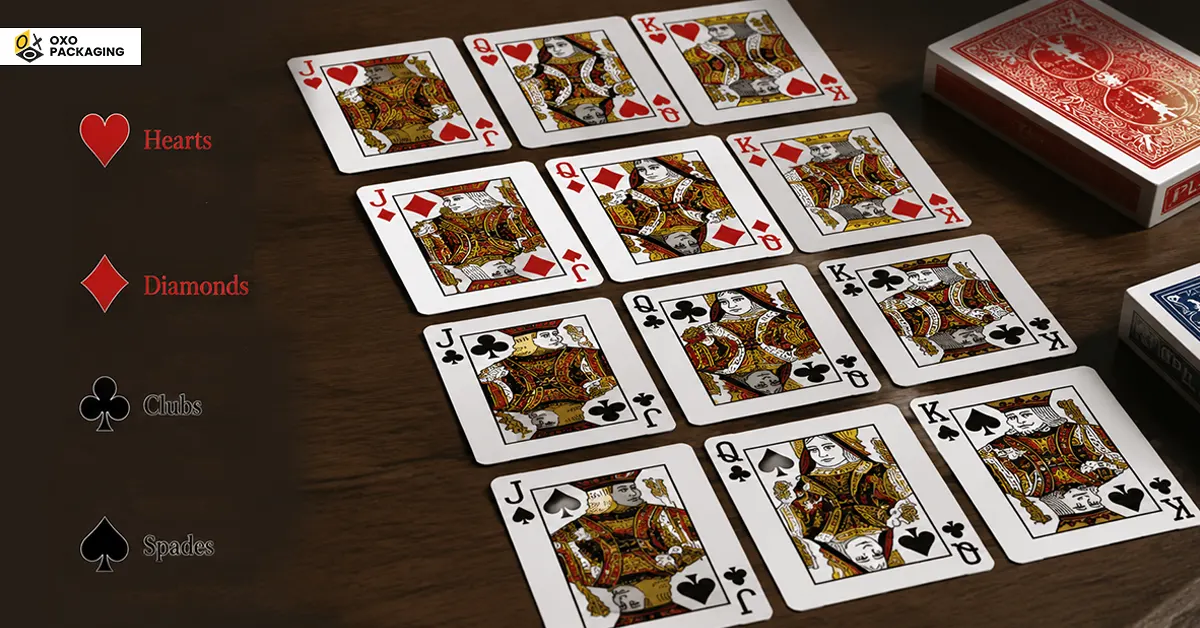
Each suit contains three face cards, giving the pack a balanced structure.
Hearts
Hearts are traditionally associated with emotions, affection and relationships. The suit includes the Jack of Hearts, Queen of Hearts and King of Hearts.
Diamonds
Diamonds are often linked with wealth, trade, business and material success. Its face cards are the Jack of Diamonds, Queen of Diamonds and King of Diamonds.
Clubs
Clubs are commonly connected with effort, action, work and achievement. The suit contains the Jack of Clubs, Queen of Clubs and King of Clubs.
Spades
Spades are sometimes associated with intelligence, authority, challenges and transformation. Its face cards are the Jack of Spades, Queen of Spades and King of Spades.
These symbolic meanings are not official rules. They have developed through tradition, literature, fortune-telling and popular culture.
Understanding the Jack
The jack is usually portrayed as a young man, servant, soldier or nobleman. In the traditional hierarchy of court cards, the jack ranks below the queen and king.
Historically, the jack represented a lower-ranking member of a royal household. In some older European card packs, this card was known by names such as knave, which referred to a male servant or attendant. The term “jack” eventually became more common in English-speaking countries.
In games that assign numerical values, a jack is often worth 11. However, its value varies significantly. In blackjack, it is worth 10 points, while in poker its importance comes from its rank and its ability to form combinations such as a pair, straight or full house.
The jack is often viewed symbolically as representing youth, energy, service and movement.
Understanding the Queen
The queen represents a female royal figure and generally ranks above the jack and below the king. She is often illustrated holding a flower, sceptre or other object associated with dignity and authority.
In traditional card games, the queen may be assigned a value of 12. In blackjack, however, she is worth 10 points. In poker, queens are strong high cards and can contribute to a wide range of winning combinations.
The queen has also become an important cultural symbol. She may represent leadership, independence, wisdom and influence. The Queen of Hearts, in particular, is widely recognised because of her role in Alice’s Adventures in Wonderland.
Understanding the King
The king is traditionally the highest-ranking face card in each suit. He is commonly shown wearing a crown and holding a sword, sceptre or other emblem of authority
In games where court cards are assigned numerical values, the king may be worth 13. In blackjack, all kings have a value of 10. In poker, a king is a powerful high card, although it ranks below the ace.
The king is generally associated with leadership, responsibility, protection and power. Its position at the top of the traditional court-card hierarchy has made it one of the most recognisable symbols in a pack of cards.
The History of Face Cards
Playing cards are believed to have originated in Asia before spreading through the Middle East and reaching Europe during the late medieval period. European card makers introduced different suit systems and court figures, influenced by local customs and social structures.
French-suited cards eventually became particularly influential. Their suits, hearts, diamonds, clubs and spades, are now used in many modern packs around the world. The court cards in these packs were based on royal and military figures, although their exact designs varied between regions.
Many modern face cards are designed as double-ended images. This means that the figure appears upright from both directions, allowing players to hold their cards without turning them around. The design is practical, but it has also become a familiar feature of contemporary playing cards.
Some historical packs gave specific names to their kings, queens and jacks. These names were sometimes linked to biblical characters, famous rulers or legendary heroes. However, there is no single universally accepted identity for the figures shown on modern face cards.
Face Cards in Popular Card Games
Face cards play different roles depending on the rules of the game.
In blackjack, jacks, queens, and kings are each worth 10 points. This makes them useful for reaching a total of 21 when combined with an ace.
In poker, face cards are high-ranking cards that can help create pairs, three-of-a-kind combinations, straights, flushes and full houses.
In bridge, face cards contribute to the ranking of cards within each suit. The king, queen and jack rank below the ace and above the numbered cards.
In rummy, face cards often carry penalty points. Players usually try to form valid sets or sequences with them before the round ends.
In war, the king commonly outranks the queen, while the queen outranks the jack. These cards can therefore decide the outcome of a battle between players.
Conclusion
Face cards are an essential part of the traditional 52-card pack. The 12 jacks, queens and kings add visual character, historical meaning and strategic value to a wide variety of games.
Although their values differ from one game to another, face cards are generally regarded as some of the most influential cards in the pack. Understanding face cards makes it easier to learn popular card games and calculate probabilities.
No. An ace is not a face card because it does not show a human figure. It is usually treated as a separate special card.
Each suit contains three face cards: one jack, one queen, and one king.
The king is normally the highest-ranking face card, followed by the queen and then the jack. Some games use alternative rankings.
They are called court cards because their illustrations traditionally represent members of a royal court.
There are 12 face cards in a 52-card pack, so the probability is 12/52, or 3/13. This is approximately 23.08 per cent.