


The Significance and Meaning of Red Colour in the Printing Industry
2026-02-09 12:05:09

Colours play a vital, dynamic, and active role in almost every field of life. They are vibrant in different shades, attracting attention, leaving a lasting impression, and staying in the memory in the long run. In every industry, especially the printing industry, colours, especially red, are a must-have choice for different projects and outcomes.
Continue to read this blog to learn the game and the role of red colour in game-changing for the printing industry.
What are Colours?
Colours are the key players in gaining the attraction of the viewers in every field of life. They are amazing choices to evoke emotions and feelings, gain confidence and trust, and grab attention and engagement to create a spellbound impact on the audience.
What Are Popular Colours in Different Colour Systems
Before we know and understand the meaning of red colour in the printing industry, it seems wise to have some discussion about some major colour systems. Major colour systems include CMYK (Cyan, Magenta, Yellow, and Black), RGB (Red, Green, and Blue). Pantone Colour Systems are some of the most popular and widely used colour systems. They are widely used in digital displays, the printing industry, and colour matching for the consistency in branding and marketing of different brands.
Colours Meanings in Psychology and Design
CMYK, RGB, and Pantone Matching Colour Systems are great choices to produce the same desirable results for consistency in marketing, branding, and creating an unforgettable brand identity. Some colours are popular with warm colours, like red, orange, and yellow, while others are cool colours, like blue, green, and purple. Warm colours show energy, passion, and happiness. Cool colours clearly narrate calm, trust, and nature.
Though the colours' meaning is not the same worldwide, there are some common grounds that are mostly practised. Designers mostly use red colour for call to attention, green for natural impact, and blue in the tech and finance industry. For branding, different colours are used to create a blend for the perfect meaning and utilisation of colour's power and aesthetics.
Significance of Red Colour in the Printing Industry
Red is one of the most powerful colours in the printing industry. It is an integral part of four-colour printing, with a powerful psychological impact and the technical role it plays in the printing industry. You can choose this red colour for multiple reasons, like gaining instant attention, evoking emotions of urgency, and brand recognition.
Red colour is a prominent, vibrant colour, and the colour of different strong emotions, like love, hate, aggression, and similar other emotions. Unlimited variations can be gained by mixing different ratios of white colours in the red for the hues, and adding black colours to get multiple shades of the red colours. And the Pantone colour system helps you retain your desired red colour for your brand consistency, like Coca-Cola, Ferrari, McDonald’s, and YouTube.
Colours clearly improve brand recognition by up to almost 80%, take only 2.5 seconds for people to decide whether to read or reject direct mail and pamphlets, and increase comprehension by 73%. Still, colours create a lasting impression and help remain more memorable by up to 39%.
What Does the Red Colour Symbolise?
The red colour symbolises different strong emotions, like love, anger, danger, and courage. This is why this colour is widely used in signaling threats, grabbing the attention of prospects and customers, and sometimes to show dominance or power.
A variety of colours, red may differ in hue, saturation (generally quoted with intensity or colourfulness), and lightness in terms of value, tone, or brightness. Designers can also create a blend by using two or three of the mentioned qualities to get the perfect combination and maximum benefits with these variations in values.
How Red Colour is Produced with CMYK for the Printing Industry?
Unlimited colours can be produced by mixing different colours. Similarly is the case with the creation of red colours. In RGS, ideal for on-screen displays, you can get the red without mixing any other colours, as Red is itself a part of this colour system. By using the CMYK colour system, you can get the pure red colour by mixing 100% magenta, 100% yellow, and the other two colours, cyan and black, with 0%.
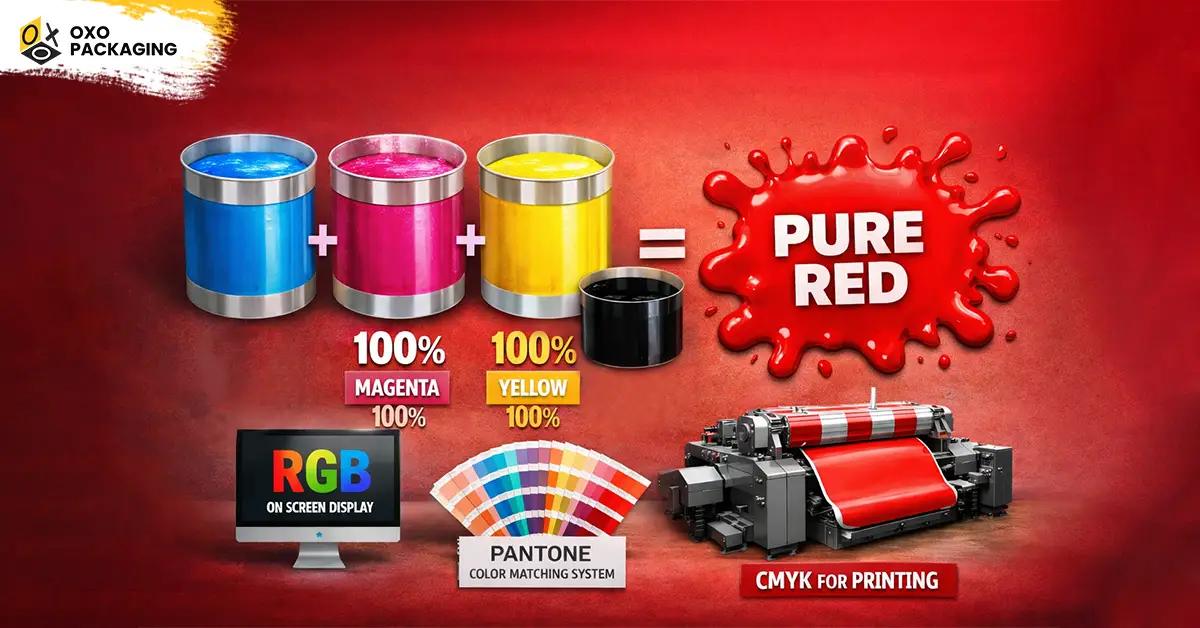
RGB needs no mixing of green and blue colours, as red is already a prime colour in this system, and further, CMYK is used in printing outputs, while RGB is used for online displays. However, the hues and shades you need to explore, research, and mix to get the required output for your branding needs. Pantone colour system helps you produce similar colours, shades or hues every time you need them for your consistent branding.
Why is Red Colour Used in Marketing?
The most desired goal of a marketer is to get maximum results in terms of sales, increase the customer count, and boost brand image for the endless results in growth and success of the business. Red colour, being a component of the four basic colours of the printing process, is supported to a great extent by evoking strong emotions, drawing attention, and communicating brand messages.
Pantone might help to create a perfect colour, shade, or hue combination with the precise, specific, and consistent branding. And above all, this can help you prevent even a little variation and ensure the same colour that every designer opts for. Meaning the ideal solution for the crucial in consistent branding, maintaining the brand identity.
Final Thought!
Marketing efforts with red colour get you noticed in an instant of attraction, evoke feelings of brands, and have a bigger impact on the prospects and customers. However, you need to choose it diligently to avoid misleading your audience, prospects, and customers.
Energy, speed, and actions are the clear features of red colours. Brands use these meanings of the red colour to grab their customers' attention, convey their brand messages, and attract strong emotions to get the desired result from their efforts.
Marketers and brand managers are more concerned with learning colours, their psychology, and how to use them effectively. Red colour is one of the most attractive and engaging colours that is used to grab attention, persuade prospects to evoke their emotions, and influence transactions with passion and excitement.
Red colour is one of the most attractive and eye-catching colours and causes customers to gain instant attention of the customers. This colour is engaging and can be used to smartly engage customers with the result-oriented CTAs. Play with this colour diligently to get the maximum return out of it.