


Types of Match Boxes: Styles, Sizes & Uses Explained
2026-11-27 13:27:53
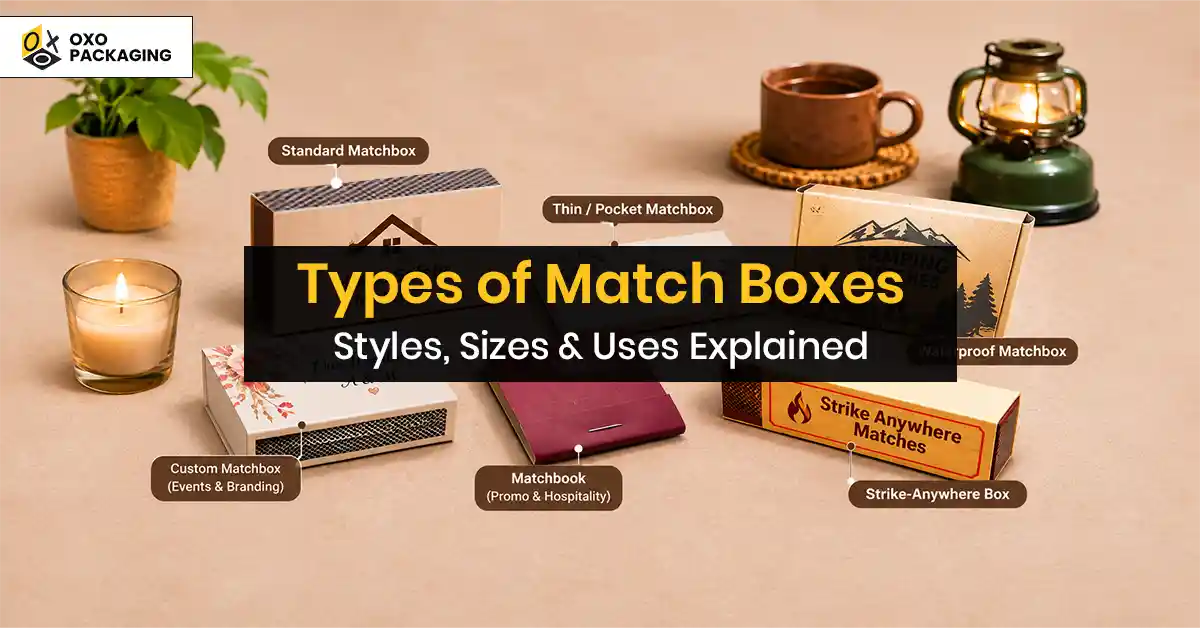
We see match boxes almost every day. They sit on kitchen counters, rest on bar tops, and hide inside camping bags. Most people grab one without thinking twice. Yet, the humble matchbox comes in many clever designs. Each style solves a specific problem. Some protect your fingers from flames. Others fit neatly into a tight pocket. Many serve as a tiny billboard for brands and weddings.
Let us explore the fascinating world of matchboxes. We will break down their main styles, common sizes, and everyday uses.
Common Matchbox Styles
Designers craft match containers in two main ways. They either build a rigid box with a sliding tray or fold a flat piece of cardboard into a book. Within these two families, several unique shapes exist.
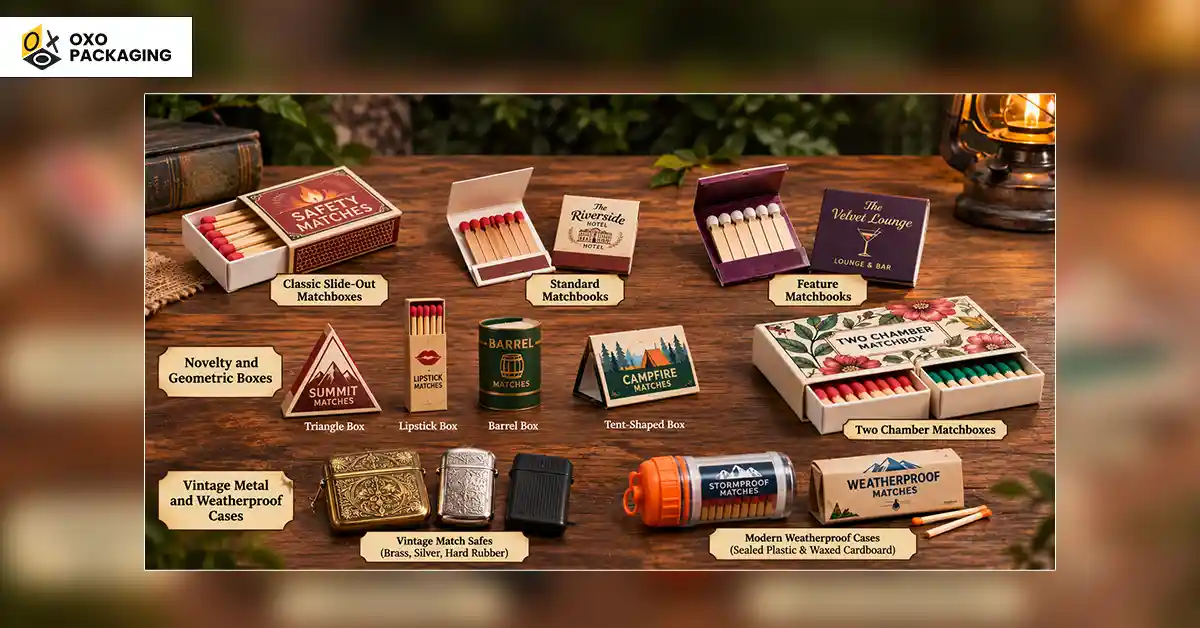
Classic Slide-Out Matchboxes
This is the design you know best. It features an outer sleeve and inner sliding tray. Manufacturers make the sleeve from sturdy cardboard or thin wood veneers.
One or both outer sides hold a rough phosphorus striking strip. You push the tray out, grab a wooden stick, and strike it against the side. The rigid frame keeps the wooden matches safe from crushing.
Standard Matchbooks
Matchbooks look like tiny paper folds. A single piece of folded paperboard holds flat cardboard match stems at the bottom. You tear off one stem and close the cover before striking.
The striking strip usually sits on the outside back of the folder. This placement protects the remaining matches from accidental sparks. Matchbooks are slim, light, and cheap to print.
Feature matchbooks
Feature matchbooks are an upgraded version of the standard matchbook. They use wider, thicker match stems. Makers often arrange these stems in one or two neat rows.
Many brands print custom logos on the flat surface. The covers are slightly larger and feel much sturdier. High-end lounges and luxury brands love the style.
Novelty and Geometric Boxes
Sometimes a standard rectangle feels too plain. Manufacturers create fun shapes to grab attention on tables and shelves.
|
Triangle and Lipstick Boxes |
These three-sided boxes stand upright on tables. Lipstick boxes get their name from their tall, slender shape. |
|
Barrel Boxes: |
These round, tube-like containers roll easily in your hand and look great on display. |
|
Tent-Shaped Boxes: |
These fold out like a tiny A-frame tent, giving brands two wide sides for artwork. |
Two Chamber Matchboxes
These extra-wide boxes hold two separate inner trays side by side. One larger sleeve covers both trays. This design doubles the match count without making the box too thick. It also creates a wide, flat surface on top. Artists and designers use this large space for detailed prints and bold graphics.
Vintage Metal and Weatherproof Cases
Before disposable cardboard took over, people carried match safes. Craftsmen made these cases from brass, silver celluloid, or hard rubber. They kept matches dry in damp weather and stopped them from lighting in pockets.
Today, outdoor gear makers use sealed plastic cylinders and waxed cardboard boxes. These modern cases protect stormproof matches from heavy rain and strong wind.
Matchbox Sizes and Capacities
Match boxes scale up and down to fit their contents. The length of the matchstick dictates the size of the box. Here is how the most common sizes compare:
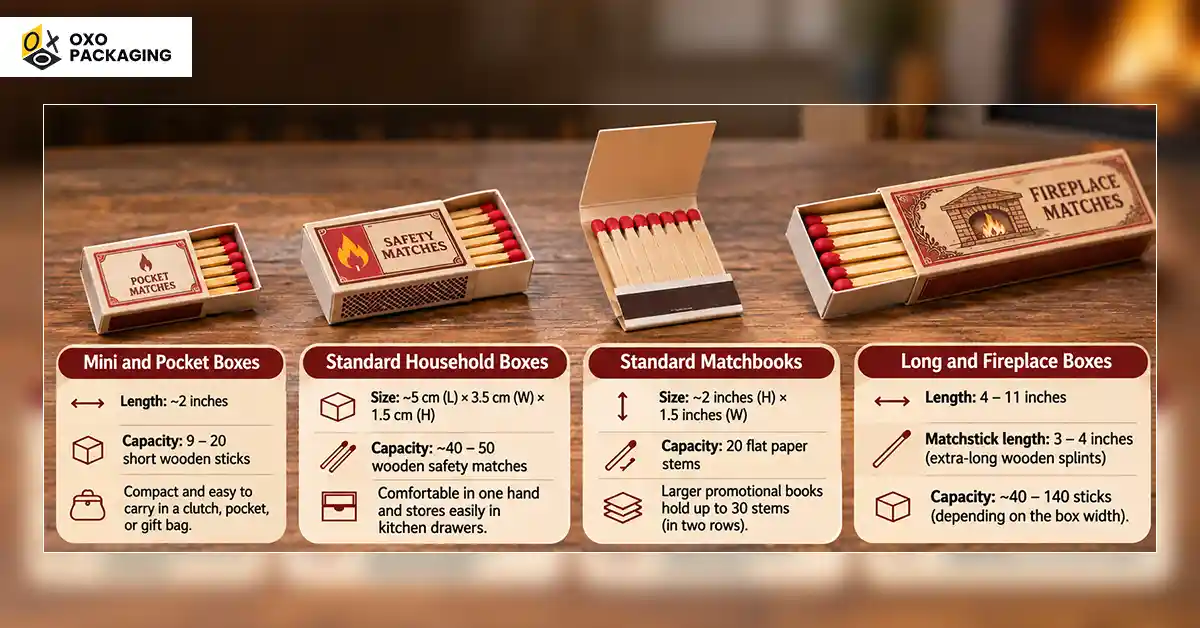
Mini and Pocket Boxes
These tiny boxes measure about two inches long. They hold between 9 and 20 short wooden sticks. Because they take up almost no space, they slip easily into a clutch, pocket, or gift bag.
Standard Household Boxes
You will find this size in almost every grocery store. A standard box measures roughly 5 centimeters long, 3.5 centimeters wide, and 1.5 centimeters tall. It holds around 40 to 50 wooden safety matches. The size feels comfortable in one hand and stores easily in kitchen drawers.
Standard Matchbooks
A classic matchbook is about two inches tall and one and a half inches wide. Most hold 20 flat paper stems. Larger promotional books hold up to 30 stems arranged in two rows.
Long and Fireplace Boxes
Long boxes range from four to eleven inches in length. They hold extra-long wooden splints that measure three to four inches long. Depending on the box width, they contain anywhere from 40 to 140 sticks.
Primary Uses by Category
Different tasks call for different flames. Choosing the right matchbox makes lighting things easier, safer, and cleaner.
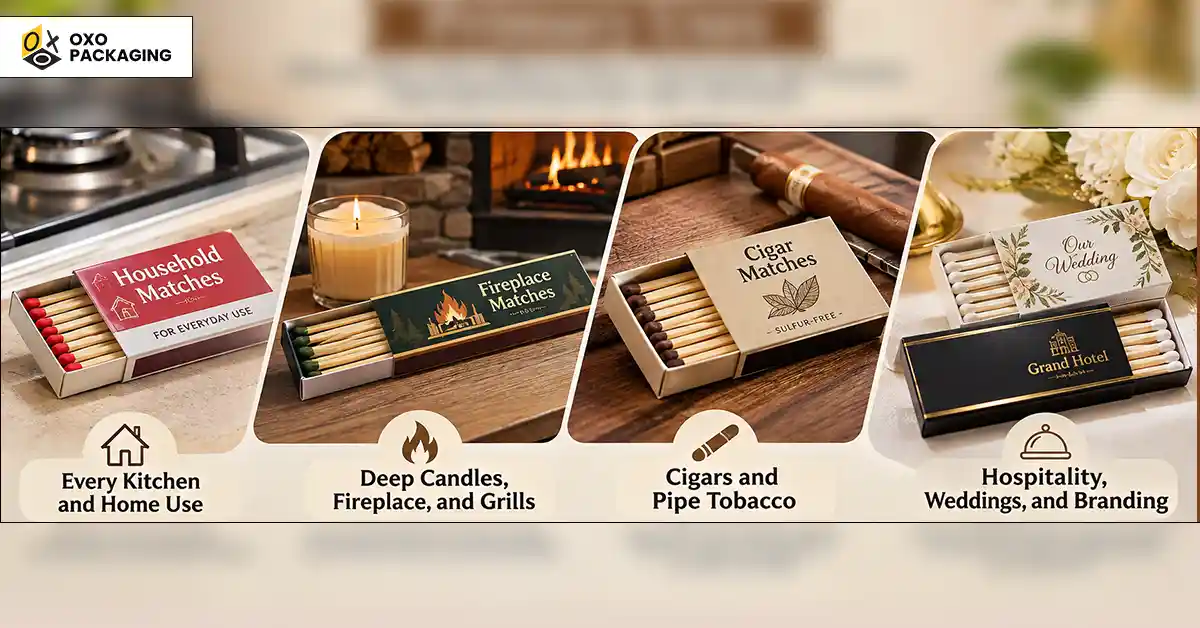
Every kitchen and Home Use
Standard household matchboxes rule the kitchen. People use them to light gas stoves, pilot lights, incense sticks, and birthday candles. The cardboard box keeps loose sticks dry and organized. Because safety matches only light on the box strip, they stay safe in busy home drawers.
Deep candles, fireplace, and Grills
Lighting a deep jar candle with a short match burns your fingertips. Long fireplace matchboxes solve this problem easily. The extra-long wooden stick keeps your hand away from the heat.
You can reach deep into a wood stove, fire pit, or charcoal grill with total control.
Cigars and Pipe Tobacco
Cigar lovers avoid standard kitchen matches and cheap lighters. Standard matches contain sulfur, which creates a harsh smell when lit. That chemical odor ruins the rich flavor of good tobacco.
Cigar matchboxes hold long, sulfur-free wooden splints. They burn slowly and cleanly, letting you toast a cigar evenly.
Hospitality, Weddings, and Branding
Restaurants, hotels, and event planners treat matchboxes as tiny souvenirs. Custom matchboxes add a personal touch to wedding tables and cocktail bars.
Guests love taking home mini square boxes or sleek lipstick boxes printed with fun artwork.
Conclusion:
The simple matchbox proves that great design lasts for generations. From tiny wedding favors to giant fireplace boxes, every shape serves a clear purpose. Next time you pick a box of matches, take a closer look at its build. You might notice a clever detail you never saw before.
A matchbox uses a rigid sliding tray inside a sturdy outer sleeve to hold loose wooden sticks. A matchbook uses a folded paperboard cover to hold flat cardboard match stems attached at the bottom.
Long fireplace matchboxes work best for deep candles. They hold extra-long three- to four-inch wooden sticks that keep your fingers safely away from the flame and hot glass.
Cigar matchboxes contain long, sulfur-free wooden sticks. Standard matches release sulfur fumes when struck, which can ruin the natural taste and aroma of a fine cigar.