


What Are Cereal Boxes Made Of? Check Out the Best Materials
2026-10-08 06:39:56
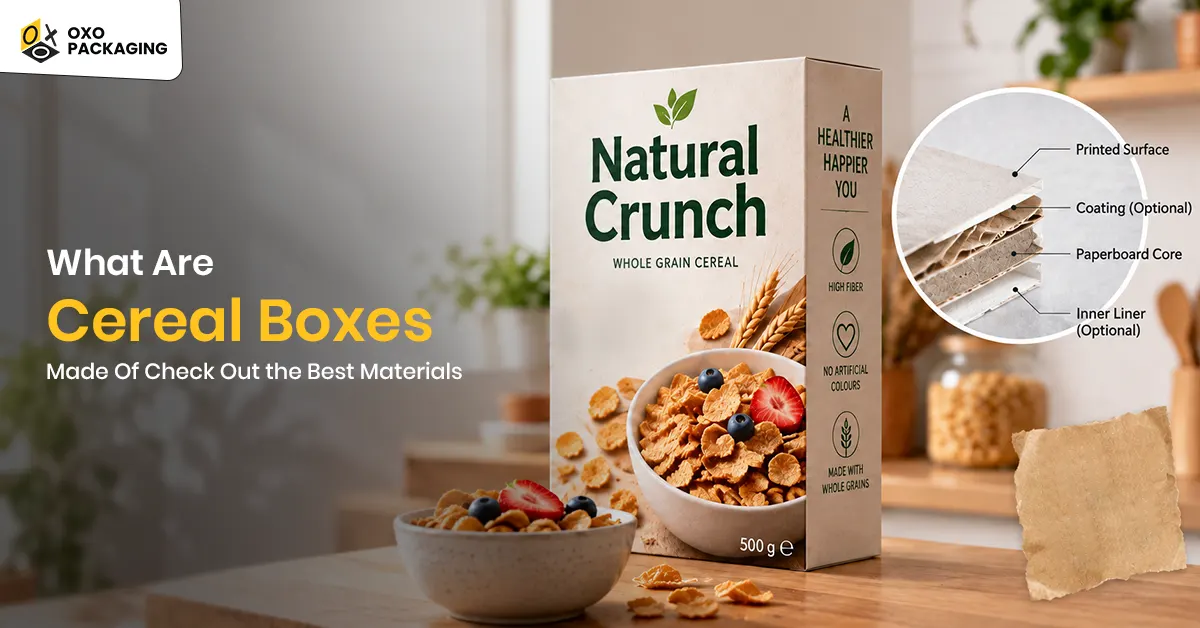
Cereal boxes do more than hold breakfast products. They protect cereal from damage, provide space for branding, and keep important product information visible to shoppers. But what are cereal boxes made of?
Most cereal boxes are made from paperboard, a lightweight yet sturdy paper-based material. However, different paperboard grades, coatings, and inner liners can be used depending on the cereal type, packaging requirements, printing quality, and desired shelf life.
Understanding these materials can help food brands choose packaging that balances protection, appearance, cost, and sustainability.
Brands can also explorecustom cereal boxes when they need specific sizes, materials, printing, and finishing options for their products.
What Materials Are Cereal Boxes Made Of?
The most common material used for cereal boxes is paperboard. It is thicker and more rigid than ordinary paper but lighter than corrugated cardboard. Paperboard provides enough strength to protect cereal during storage, transportation, and retail display.
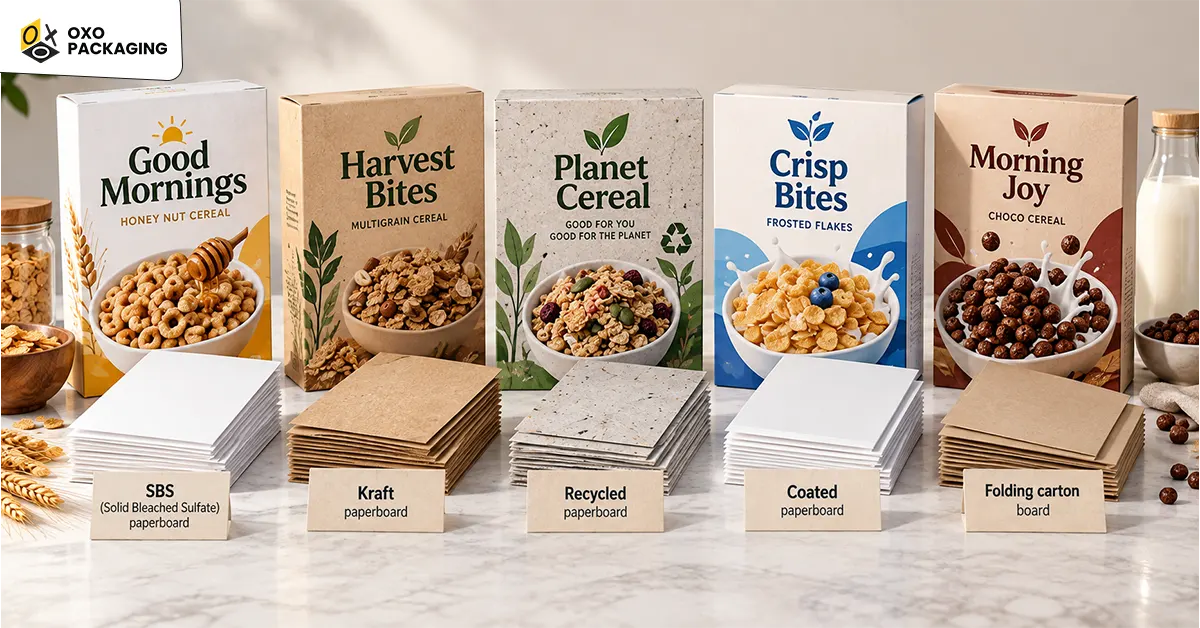
Common materials include:
- SBS (Solid Bleached Sulfate) paperboard
- Kraft paperboard
- Recycled paperboard
- Coated paperboard
- Folding carton board
The selected material depends on the product's requirements and the brand's packaging goals.
Paperboard
Paperboard is the standard material for many cereal cartons. It offers a smooth surface for high-quality printing while maintaining enough stiffness to hold its shape.
Brands can print logos, nutritional information, ingredients, promotional graphics, and other required details directly onto the carton. Paperboard is also relatively lightweight, which can help reduce packaging weight and shipping costs.
Its folding properties make it suitable for creating cartons in different sizes and styles.
SBS Paperboard
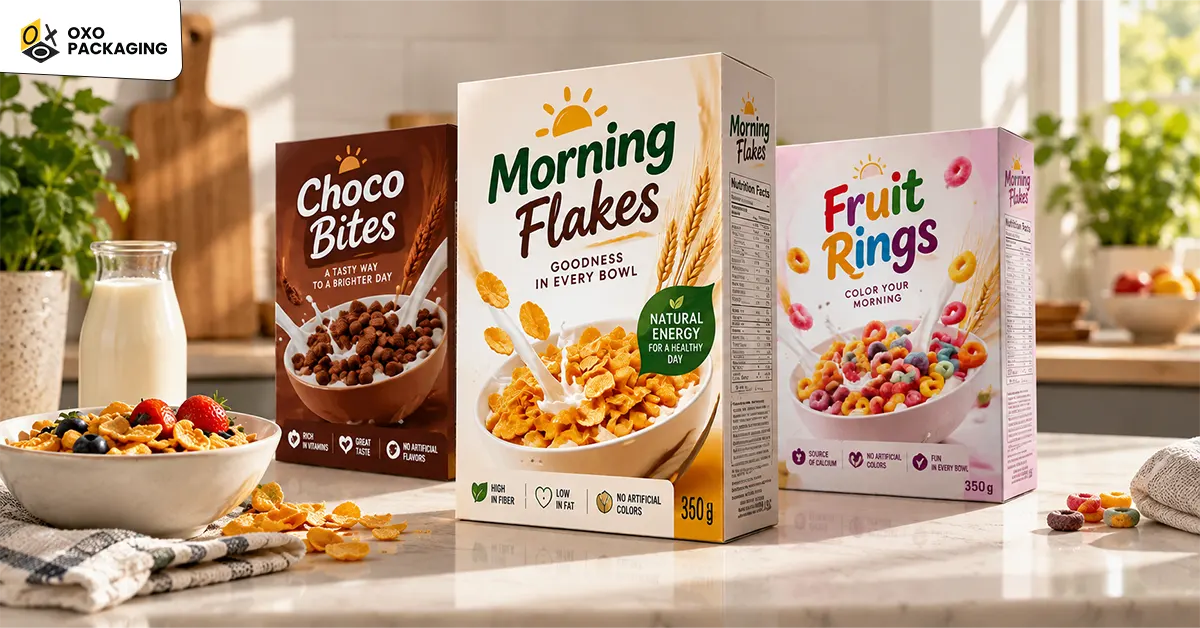
Solid Bleached Sulfate SBS is a premium paperboard commonly selected when brands want a clean, bright printing surface. It is made primarily from bleached virgin wood pulp and has a smooth appearance.
SBS is useful for cereal packaging that depends heavily on colourful graphics and detailed branding. Its surface can support sharp images, vibrant colours, and different finishing options.
However, brands should consider the material sourcing and environmental impact when selecting virgin-fiber paperboard.
Kraft Paperboard
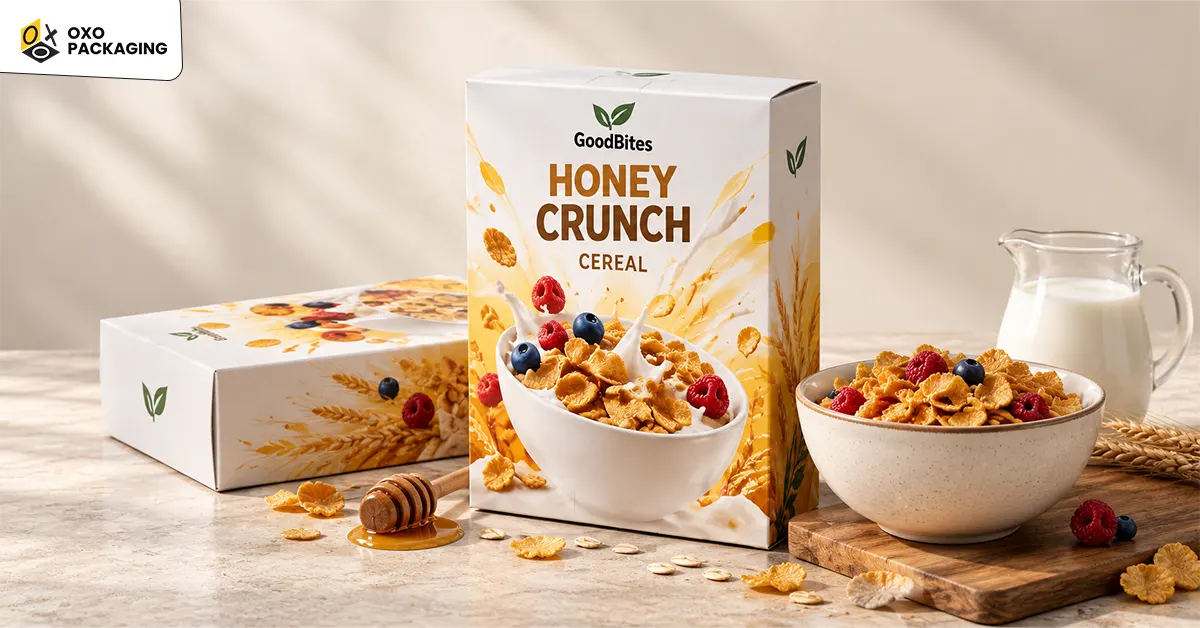
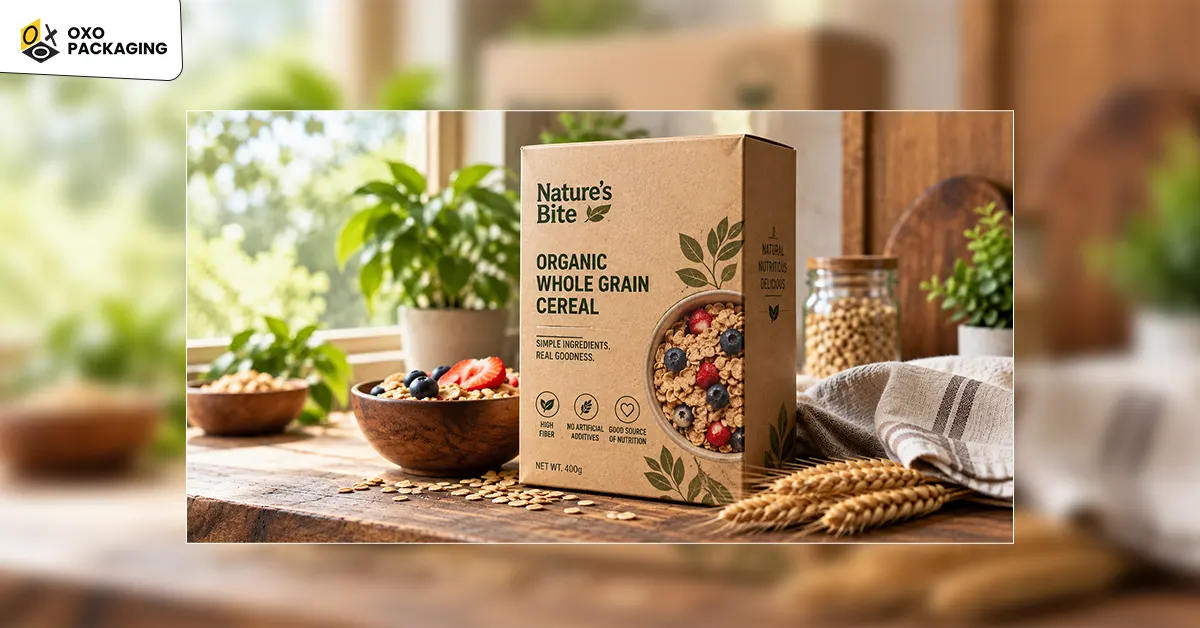
Kraft paperboard is another option for cereal packaging for brands that want a natural or rustic look. I have seen many brands choose Kraft paperboard for its feel. Kraft paperboard's brown colour can create a visual style that fits well with organic, natural, and minimally processed food brands.
Kraft paperboard can also be printed with logos, product details, and other graphics. Kraft paperboard's appearance may not give the bright white background like SBS, but Kraft paperboard's appearance can still be part of the visual appeal.
Recycled Paperboard
Recycled paperboard is produced using recovered paper fibers. I have seen recycled paperboard become popular among eco- brands. Recycled paperboard can help brands incorporate content into their packaging strategy and reduce reliance on virgin paper fibers.
Recycled paperboard's appearance and strength can vary depending on the paperboard grade and manufacturing process. A suitable grade should be selected based on the cereal product, carton size, printing requirements, and distribution conditions.
Food packaging brands should also ensure that the selected material and any coatings or components are appropriate for the intended application.
Coating and Finishes
The paperboard itself is only one part of cereal packaging. Many cereal cartons use coatings or finishes to improve their appearance and performance.
A coating can provide a smoother printing surface, improve moisture resistance, or create a specific visual effect. Common finishing choices include:
- Gloss Coating
- Matte Coating
- Aqueous Coating
- Spot Finishes
- Specialty Effects
The right finish depends on the brand's desired appearance and functional requirements.
What is Inside a Cereal Box?
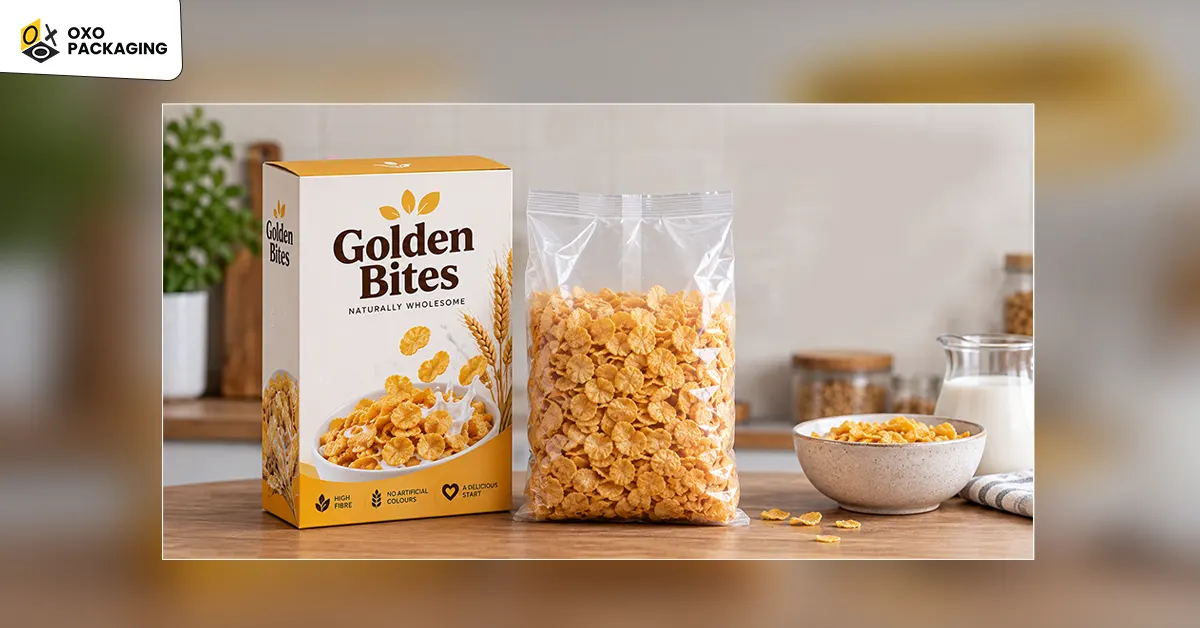
A cereal carton usually does not hold cereal directly against the printed outer carton. Many cereals are packed inside an inner bag or liner, which provides an additional barrier.
This inner packaging may be made from plastic film or another suitable food-contact material. It helps protect cereal from moisture, air, odors, and contamination while the outer carton provides structural support and branding space.
The combination of an outer paperboard carton and inner liner creates multiple layers of protection.
Why Is Paperboard Used for Cereal Boxes
Paperboard is popular because it offers a combination of strength, printability, weight, and cost.
Protection
A designed carton helps protect cereal from crushing and handling damage. The inner liner provides another layer of protection against exposure.
Branding
The large printable surface gives brands plenty of room for product names, illustrations, nutritional information, ingredients, claims, and promotional messaging.
Easy Storage
Paperboard cartons can be designed to stack on retail shelves and in storage areas. Their rectangular structure also helps brands use shelf space effectively.
Lightweight Construction
Compared with packaging materials, paperboard can provide structural support without adding excessive weight.
Customisation
Cereal cartons can be produced in various dimensions, opening styles, and printing configurations. This makes them suitable for cereal products and brand identities.
For brands that package different types of retail products, similar material and printing considerations also apply tocustom product boxes, where size, material, graphics, and structural requirements can be customized according to the product.
How to Choose the Best Material for Cereal Boxes
Choosing the material for cereal boxes needs more than just looking at how it looks. Consider these factors:
Product protection:
Decide how much protection cereal needs while it is stored and moved.
Moisture resistance:
Cereal can lose quality if it gets damp, so the packaging must block moisture well.
Printing needs:
If the design has detailed graphics or bright colours, pick a paperboard that prints well.
Sustainability goals:
Look at content, where the fibers come from, how easy it is to recycle, and the whole packaging layout.
Budget:
The grade of material, printing, coating, finishing, and how many boxes you order all change the cost.
Box size:
The carton must fit the cereal and its liner, leaving no empty space. For smaller portions, promotional packs, or sample-size products,custom mini cereal boxes can be designed around the required product dimensions.
Conclusion:
So, what are cereal boxes made of? Paperboard is the primary material used for most cereal cartons, with options such as SBS, Kraft, recycled, and coated paperboard available for different packaging needs. An inner liner or bag often works alongside the outer carton to provide additional product protection.
The best cereal box material depends on your product, printing requirements, protection needs, sustainability goals, and budget. Selecting the right combination of paperboard and inner packaging can help create a cereal package that looks attractive, protects the product, and performs well throughout its journey from production to the retail shelf.
If you need help selecting the right box material, size, or packaging style, you cancontact OXO Packaging Australia to discuss your packaging requirements and request a quote. OXO lists phone and email contact options on its Australian website.
Most cereal boxes are made from paperboard because it is lightweight, printable, foldable, and strong enough for retail packaging.
Cereal cartons are generally made from paperboard, which is a type of thick paper-based packaging material. Corrugated cardboard is typically used for shipping rather than the retail cereal carton.
Many cereals are packed inside an inner bag or liner before being placed inside the paperboard carton. This helps provide additional protection from moisture, air, and contamination.
Paperboard cereal cartons are commonly recyclable where local recycling programs accept them. The inner liner should be handled according to local recycling or waste guidelines.
The best material depends on the cereal product, protection requirements, printing needs, sustainability goals, and budget. Paperboard grades such as SBS, Kraft, and recycled board can serve different purposes.