


Since the 19th century, the tape industry has been modernised and diversified. The burst of different tapes reached the market when a global company, EM Engineer, introduced masking tape in 1925. Following this, which tape you should choose for your business can be a bit puzzling.
Whether you need paper tape for e-commerce packaging or niche tape for retail packaging, this blog helps you find the right option. Let’s explore different types of packing tape:
What Is the Best Packing Tape for Cardboard Boxes?
The best packing tape depends on the box weight, carton surface, shipping conditions, storage time, and application method. For most everyday cartons, BOPP polypropylene tape is a practical choice. Paper or kraft tape can suit paper-based packaging goals, while reinforced filament tape is better for heavy or demanding loads. The adhesive also matters because acrylic, hot-melt, and solvent-based adhesives perform differently in cold, heat, storage, and fast packing environments.
Choosing tape only by price can lead to failed seals, repacking, and damaged shipments. Businesses should match the tape specification to the actual carton and conditions rather than using one tape for every application.
An Overview of Packing Tape
Before exploring different types of packaging tape, first understand what packing tape is. The reason is that packing tape is one of the most in-demand options. It is mainly used to seal cartons made from cardboard, as it offers strong adhesion to its surface, durability, and holding power under different conditions. Let’s dive into its further details:
Materials
Usually, BOPP (Biaxially Oriented Polypropylene) is used to manufacture packing tape. BOPP is plastic, so it can be stretched in two directions during production for increased durability. It has high tensile strength, moisture resistance, and relatively low cost, making it an effective, economical, yet attractive packaging tape for business.
However, other materials used to make packing tape include fibreglass derived from polypropylene or polyester. Fibreglass packing tape is suitable for heavy-duty packages due to its exceptionally high tensile strength and excellent abrasive resistance.
Another material for manufacturing packing tape is activated gummed paper tape, which is an attractive option for eco-friendly brands. This paper tape exudes a natural look and can be recycled.
Packing Tape Adhesive Types
The backing is only one part of packing tape performance. Adhesive type determines initial tack, long-term holding power, and performance across different temperatures and carton surfaces.
Acrylic adhesive:
A good option for long storage, temperature changes, and applications where ageing and environmental resistance are important.
Hot-melt adhesive:
Provides strong initial grab and is commonly used for fast packing operations and everyday shipping cartons.
Solvent or rubber adhesive:
Offers aggressive adhesion and can be considered for heavy cartons, rough surfaces, and demanding conditions.
Uses
Apart from sealing and securing boxes for shipping, storage, and moving, packing tape protects contents from dust, moisture, and tampering, and strengthens packages for heavy loads. Beyond basic sealing, it also enhances branding with customised labels.
Standard Sizes
The rolls of packing tape are approximately 48mm wide and around 75m long. However, keep in mind the length of the packing tape depends on your system for applying tape. Regarding width, consider standard dimensions such as:
- 24mm wide for smaller packages than standard boxes.
- 36 28mm wide for small to medium boxes.
- 50mm wide for securing the gap between flaps on most cardboard boxes.
- 72mm wide for sealing the larger gaps on oversized boxes or cartons.
Main Types of Packing Tape for Shipping
Packing tape can be grouped by its backing, adhesive, reinforcement, and intended use. For shipping and carton sealing, the most relevant options include BOPP/PP tape, kraft paper tape, water-activated tape, filament tape, and specialty tapes.
|
Tape Type |
Main Benefit |
Common application |
|
BOPP/PP tape |
Versatile and economical |
Everyday shipping and e-commerce cartons |
|
Kraft paper tape |
Paper-based appearance |
Retail and paper-focused packaging |
|
Water-activated tape |
Strong, fibre-bonded seal |
Corrugated shipping cartons |
|
Reinforced/filament tape |
High tensile strength |
Heavy cartons and bundling |
|
Printing packaging tape |
Sealing plus branding |
Branded e-commerce and retail shipments |
Explore 6 Different Types of Packaging Tape
Now dive right into different types of packing tape, because different tapes serve different purposes, even if it’s about sealing up a box. One wrong choice can cause your box lid to burst open during shipping. Hence, consider the following types of tapes in detail to avoid such mishaps and make well-informed buying decisions:
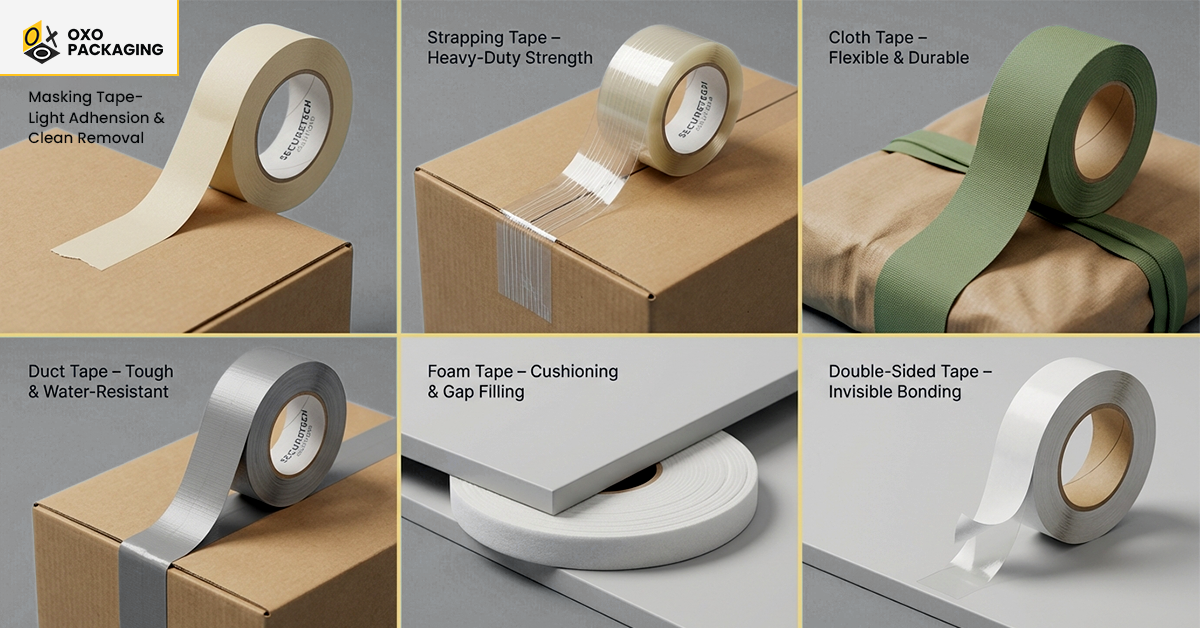
Masking Tape
Masking tape is a light-adhesive paper tape. It is popular for its easy tearability and clean removal. You can use masking tape to protect surfaces like walls, trim, or car parts from paint or other substances. It also helps you create sharp, clean lines for projects. Temporary bundling, labelling, and packaging also become possible with masking tape.
Common Uses
- Painting: Mask off edges, trim, and areas to prevent paint bleed.
- Crafts: Hold items, create patterns, or protect surfaces.
- Automotive: Mask car parts during painting or repairs.
- Packaging & Labelling: Seal boxes or mark items.
Strapping Tape
Strapping tape is also known as filament tape. As its name indicates, this tape is a heavy-duty, high-strength adhesive tape strengthened with fibreglass filaments for exceptional tensile strength. You can use filament tape for bundling, reinforcing, and securing heavy items in packaging. Or providing strong joint support in sports medicine.
Common Uses
- Packaging: Bundle items, close cartons, reinforce boxes, and unitise pallet loads.
- Industrial: Secure appliance components, racks, and panels during manufacturing and shipping.
- Sports Medicine: Provide rigid support for joints like ankles, knees, and shoulders to prevent sprains and support recovery.
Cloth Tape
A cloth tape is also known as fabric or gaffer's tape. It is a strong, durable adhesive tape with a cloth backing, often coated with polyethylene for water resistance. It is popular for its high tack, flexibility, and tearability. You can use cloth tape for heavy-duty repairs, bundling, protection, and sealing in various industries like automotive, construction, and film.
Common Uses
- Repairs: Bundling, mending, and general emergency fixes.
- Protection: Protecting edges during sanding or abrasive processes (automotive).
- Filming: Taping cables and marking equipment.
- Crafts: Bookbinding and mounting projects.
Duct Tape
Duct tape is a strong, durable, and often waterproof adhesive tape made with a cloth or fabric mesh backing. It has a polyethylene top layer and a powerful rubber-based adhesive. Duct tape has high stickiness, flexibility, and water resistance.
This tape is popular for being easy to tear by hand but tough enough for heavy-duty applications. However, duct tape is similar to cloth tape but typically easier to tear cleanly and offers a matte finish or durable sealing.
Common Uses
- Repairs: Fix leaky hoses, reinforce damaged items, and hold broken parts together.
- Sealing: Seal HVAC ducts and other air leaks.
- Crafts & Bundling: Create temporary fixes, bundle items, and various DIY projects
Foam Tape
Foam tape is a versatile adhesive product made from a foam core with pressure-sensitive adhesive on one or both sides. You can use it for mounting, sealing, and cushioning, especially on uneven surfaces where it fills gaps and dampens vibration better than thin tapes. Foam tape is available in single- or double-sided versions. It is widely used in homes.
Common Uses
- Mounting: Posters, decorations, nameplates, light fixtures, mirrors.
- Sealing & Gasketing: Windows, doors (weatherstripping), AC units, automotive cowl covers.
- Insulation: Thermal and sound insulation in various structures.
- Crafts: Add a dimension to scrapbooking and card-making.
Double-Sided Tape
Double-sided tape is an adhesive tape with sticky surfaces on both sides. A liner separates these sides and is used to bond two items together invisibly. This tape acts as a strong, convenient alternative to nails or glue for mounting objects like posters, decorations, car emblems, or for crafts and industrial bonding.
Common Uses
- Home & Decor: Hang pictures, mirrors, decorations without drilling.
- Crafts: Scrapbooking, card making, model building.
- Automotive: Mount emblems, badges, trims.
- Industrial: Splice, seal, gasket, electronics assembly.
Transparent Tape
Transparent tape, commonly referred to as Scotch tape, is one of the most commonly used tapes in the world. These tapes are used for a variety of applications. Some of the common uses are:
Common Uses
- Sealing envelopes
- Repairing torn paper products
- Holding Light objects together
Gaffers Tape
Gaffer's tape is a high-performance, cloth-backed adhesive tape with a matte finish that is designed for temporary use on film sets. Some of the common uses of gaffer's tape are:
Common Uses
- Use to secure cables
- Use on film sets and in the theater
- Versatile tool for quick repairs
- Labeling and marking
Consider Specialty Tape and Films
Apart from different types of packaging tape, consider different types of specialist tapes. Wondering about specialist tapes? They are adhesive tapes designed with unique properties like extreme temperature resistance, specific adhesion levels, or unique shapes for demanding tasks beyond basic sealing, unlike packing tape. Let’s dive into different tape and film types of specialty tapes:
Surface Protection Film
A Surface Protection Film (SPF) is a temporary, self-adhesive film that creates a barrier to shield surfaces like paint, glass, metal, or electronics. As a result, keep these surfaces safe from damage like scratches, dirt, abrasions, UV rays, and impacts during manufacturing, shipping, or use while preserving the original finish and integrity until removed, often leaving no residue.
Stationery Tape
Stationery tape is also known as Scotch tape or invisible tape. It is a thin, transparent adhesive tape used for general office, school, and household tasks like sealing envelopes, mending paper, wrapping gifts, and labelling.
Thread Seal Tape
Thread Seal Tape is also known as PTFE tape or plumber's tape. It is also a thin, non-stick film (polytetrafluoroethylene) used to seal threaded pipe joints. PTFE tape prevents leaks by filling gaps and lubricating threads for easier tightening and a more secure fit.
Electrical Tape
Electrical tape is also known as insulating tape. It is a stretchy, pressure-sensitive vinyl (PVC) tape used to insulate and protect electrical wires and connections while preventing shocks and fires by covering exposed conductors and bundling wires.
Anti-Slip Tape
Anti-slip paper is also known as a grip sheet, which is a specialised paper with a friction-enhancing coating. You can use this tape primarily to stabilise palletised goods during transport. Anti-slip tape also prevents shifting, damage, and pallet collapse by increasing friction between layers.
Drywall Tape
Drywall tape is a material, usually paper or fibreglass mesh. It is used to cover and strengthen seams between drywall sheets while preventing cracks. As a result, drywall tape creates a smooth, seamless wall surface when used with joint compound, e.g., mud.
Wrap Up!
You have explored different types of packing tape, packaging tape, and specialty tape. Each one of them has different strengths. Consider them all to choose the right one, or contact OXO Packaging to order your customised packaging tape to enhance your branding.
While there are many specific types, tapes generally fall into three broad categories based on construction: Single-Sided Tapes (like duct, masking, electrical), Double-Sided Tapes (for mounting/crafts), and Specialty Tapes (like filament tapes) designed for unique needs.
The strongest type of packing tape is Filament Tape. It has a durable nature with fibreglass strands for exceptional tensile strength, making it ideal for heavy-duty items and securing large shipments, far surpassing standard tapes.
Neither brown nor clear packing tape is "better"; they serve different purposes. Brown tape is often preferred for heavy-duty, professional sealing, while clear tape is for light-duty, visible applications labels, gifts, and general use.
Shipping tape is designed for durability during transit, handling rougher conditions with strong adhesives like hot melt or acrylic, and derived from materials including polypropylene or polyester for heavier loads. However, packing tape is often thicker, more user-friendly for general moving and storage. It offers long-lasting stickiness in varied temperatures, making it ideal for non-commercial, everyday box sealing.