


Butter Paper vs Wax Paper: Key Differences for Better Food Packaging
2026-09-16 07:02:36
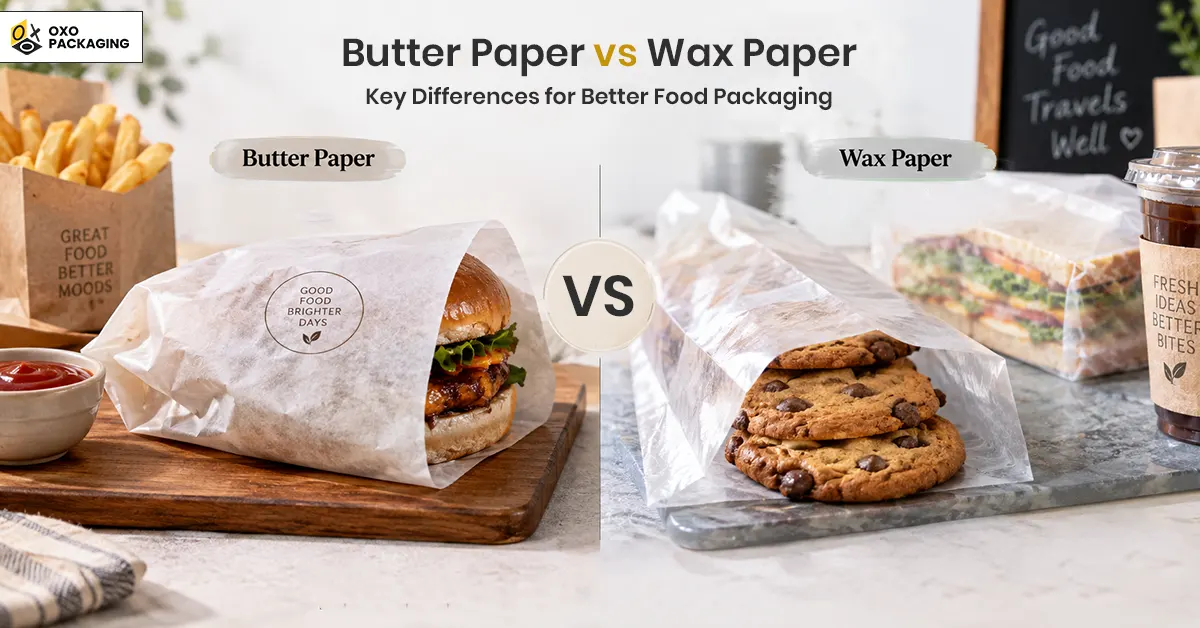
Choosing the right paper can change how food looks, feels, travels, and reaches the customer. Butter paper and wax paper appear similar, but their performance can differ depending on the food, temperature, moisture, and packaging method.
Using the wrong paper may lead to grease stains, sticking, poor presentation, or even safety issues when heat is involved. For bakeries, cafes, restaurants, takeaway businesses, and food manufacturers, the decision should go beyond appearance or price. The paper must match the job.
In this blog, we will compare both options and find key differences between them to help you evaluate which one is better for you. Read on.
Difference Between Butter Paper vs Wax Paper
Butter paper and wax paper both create a barrier between food and other surfaces. They can help reduce sticking, protect packaging from grease, and make food easier to handle. However, the names are not always used consistently across markets, which creates much of the confusion.
Wax paper generally contains a thin wax coating, often paraffin wax. This coating gives the sheet a smooth, moisture-resistant, and non-stick surface. It works particularly well for cold or room-temperature food wrapping and food preparation.
Butter paper is commonly associated with grease-resistant or greaseproof food paper. In commercial food packaging, it is widely used for wrapping burgers, sandwiches, pastries, bakery products, sweets, and other foods that contain oil or moisture.
“Butter paper” can describe different products in different markets. A packaging buyer should focus on the paper's actual coating, grease resistance, heat rating, and intended food application.
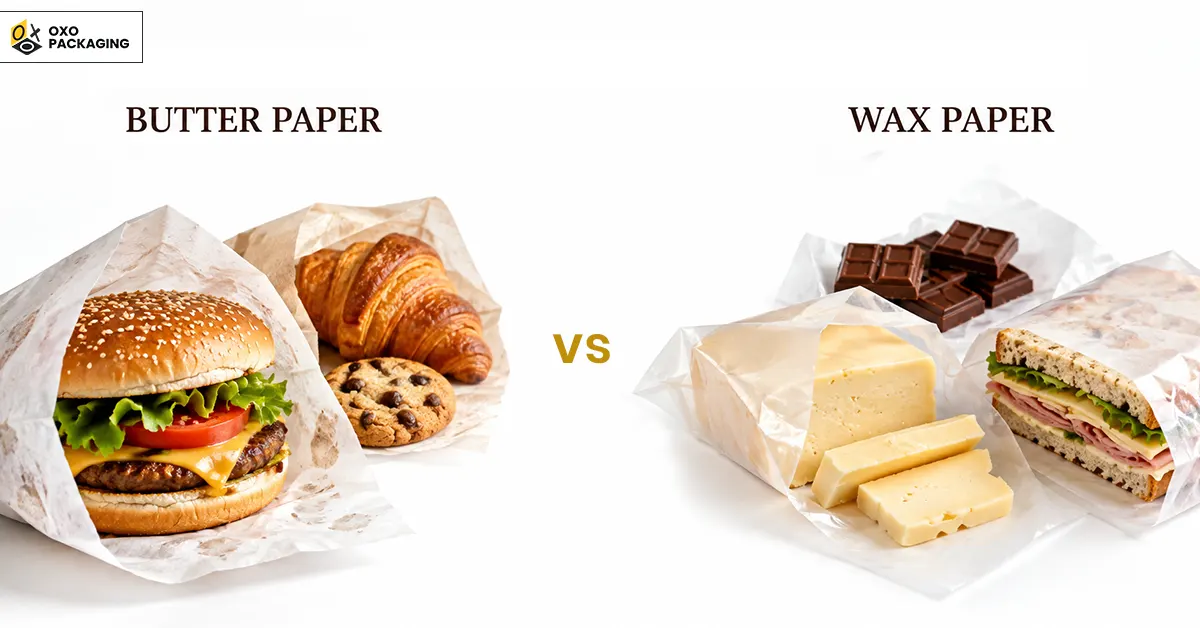
What Is Butter Paper Used For?
Butter paper has become a practical choice for food businesses because it combines simple handling with useful grease resistance.
Restaurants can use it to wrap burgers, sandwiches, wraps, fried snacks, and other takeaway foods. Bakeries can use it to separate cookies, brownies, pastries, and sweets or line food boxes and trays.
Its value is not limited to protection. The paper can also improve presentation. A clean liner can prevent grease from spreading across a box while giving the food a more organised appearance.
For brands, printed sheets can go a step further. A repeated logo, pattern, slogan, or brand element turns an otherwise ordinary food liner into part of the customer experience.
Businesses can order Custom butter paper when they want packaging paper that supports both food presentation and brand recognition. However, the specification should always match the food application, especially where heat or direct food contact is involved.
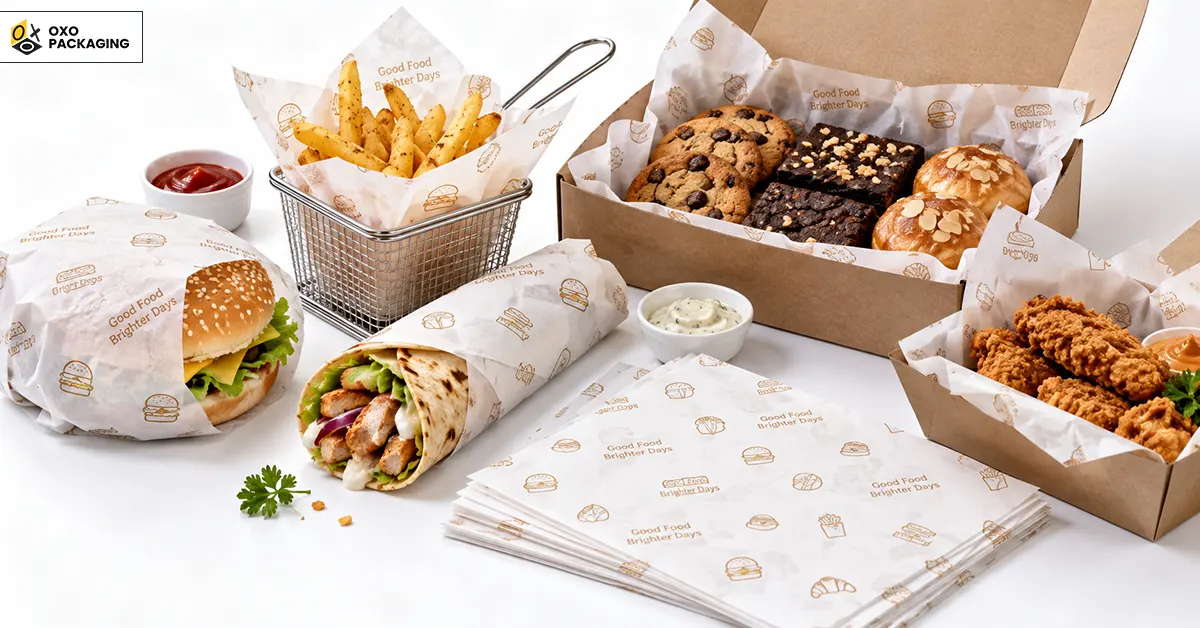
Common Uses of Butter Paper
Butter paper comes with endless uses; however, the most common uses of this paper are:
- Wrapping burgers and sandwiches
- Lining takeaway boxes and trays
- Separating bakery products
- Wrapping pastries and sweets
- Protecting food boxes from grease
- Creating branded food presentation
- Supporting takeaway and delivery packaging
The main advantage is practicality. Instead of treating the paper as an afterthought, food businesses can use it as an extra protective and branding layer.
What Is Wax Paper Used For?
Wax paper is paper coated with wax to create a smooth, non-stick, and moisture-resistant surface. It is particularly useful when food needs to be wrapped, separated, or placed between surfaces without sticking.
Wax paper works well for sandwiches, cheese, sweets, chocolate, cold foods, and food-storage applications. It can also help separate individual pieces of food during preparation or storage.
For example, a bakery may use wax paper between layers of cookies or confectionery. A deli may use it to wrap a sandwich before placing it inside another package.
Wax paper is flexible and easy to fold, making it convenient for fast-paced food service. Yet its biggest limitation is heat.
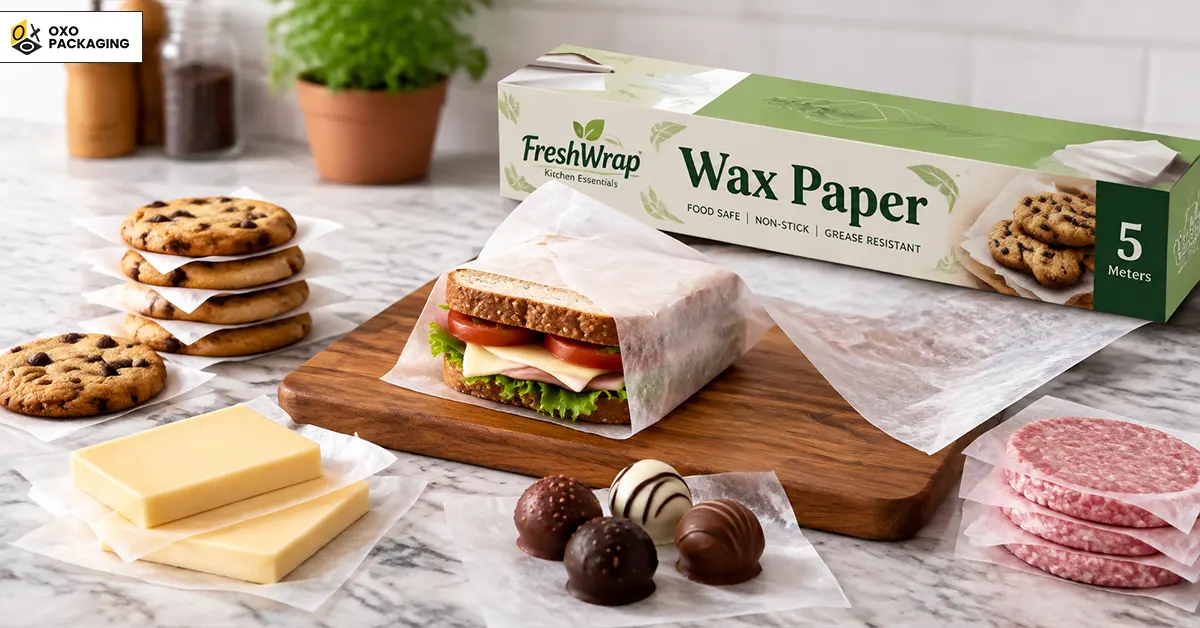
The wax coating is not designed for direct exposure to high oven temperatures. When exposed to excessive heat, the wax can melt, and the paper may become unsuitable for the application. Reynolds Brands specifically distinguishes wax paper from parchment paper because wax paper is intended for cold storage and barrier applications rather than direct high-heat cooking.
Key Difference Table for Butter Paper & Wax Paper
Feature |
Butter Paper |
Wax Paper |
|
Main purpose |
Food wrapping and grease protection |
Wrapping, separating, and moisture protection |
|
Grease resistance |
Generally strong |
Strong |
|
Moisture barrier |
Good, depending on specification |
Good |
|
Flexibility |
Usually flexible |
Highly flexible |
|
Branding potential |
Suitable for printed food packaging |
Can support printed packaging where food-contact specifications allow |
|
Best application |
Takeaway food, bakery and food wrapping |
Cold food, storage and food preparation |
The important lesson is simple: do not select paper based only on its name. Product specifications matter.
Which Paper Works Better for Food Wrapping?
For food wrapping, the better choice depends on the food itself. Butter paper is a strong option when grease control and presentation are priorities. It can help keep oil from transferring onto hands, outer boxes, or serving surfaces. This makes it useful for burgers, pastries, sandwiches, sweets, and similar products.
Wax paper is useful when the main requirement involves a smooth, non-stick barrier for cold or room-temperature food. It can make wrapping and separating food easier while helping maintain a clean presentation.
For very oily or wet foods, however, businesses should test the exact paper before moving into large-scale production. Grease resistance, moisture resistance, paper weight, coating, and exposure time all affect real-world performance.
A simple sample test can prevent expensive packaging mistakes. Wrap the actual product, leave it for the expected holding period, and check the paper for oil penetration, tearing, sticking, and odour transfer.
Can Wax Paper Go in the Oven?
Wax paper should not be used as a direct oven liner unless the manufacturer specifically states that the particular product is designed for that application.
The wax coating can melt when exposed to high heat. Reynolds Brands advises against direct oven exposure for wax paper and recommends parchment for baking because parchment uses a food-safe silicone coating designed for heat resistance.
This distinction is especially important for commercial kitchens. A packaging material that works perfectly for wrapping a cold sandwich may perform poorly when exposed to an oven.
Parchment paper is a different material. It uses a silicone coating that provides non-stick properties and heat resistance. Reynolds Brands states that its parchment paper can handle temperatures up to 425°F.
Never assume that every paper sold as “butter paper,” “baking paper,” or “wax paper” has the same heat rating. Always verify the specification.
Butter Paper, Wax Paper, and Parchment Paper Compared
These three papers are grouped together, but their jobs can be quite different. Butter paper is commonly selected for grease-resistant food wrapping, lining, separation, and presentation.
Wax paper is useful for cold food wrapping, storage, and non-stick preparation where high heat is not involved. Parchment paper is the preferred option for many oven-baking applications because its silicone coating provides heat resistance and non-stick performance.
This means a bakery may need more than one type of paper. Parchment can handle baking, while butter or wax paper can support wrapping and presentation after the product leaves the oven.
A useful rule is:
- Wrapping and presentation? Think grease-resistant food paper.
- Cold storage? Wax paper can work well.
- Oven baking? Choose properly rated parchment.
How Branded Food Paper Improves Packaging
Packaging does more than protect food. It communicates the brand before the customer takes the first bite. A plain wrapper performs a basic function. A branded wrapper can create recognition.
Printed food paper can display a business logo, colours, pattern, tagline, or other visual elements. This is particularly valuable for takeaway brands because the wrapper often remains visible while customers eat or photograph their food.
Conclusion
The butter paper vs wax paper debate does not have one universal winner. Each material has a place. Butter paper can make sense for grease-resistant wrapping, food presentation, and takeaway packaging.
Wax paper works well for cold food storage, separation, and non-stick applications. Parchment paper takes the lead when properly rated heat resistance and baking performance are required.
The smarter approach is to match the paper to the food, temperature, moisture level, handling conditions, and branding needs. If you still have questions or want to buy any of these papers for your food brand, feel free to contact OXO Packaging today.
Butter paper can be a better choice for grease-resistant food wrapping, takeaway meals, bakery items, and food presentation. Wax paper works well for cold foods and separation but is not intended for direct high-heat use.
Wax paper should not be used directly in the oven unless the manufacturer specifically states that it is suitable for that temperature. Its wax coating can melt when exposed to high heat. For baking, use properly rated parchment paper instead.
Butter paper is commonly used for burgers, sandwiches, pastries, bakery products, sweets, fried snacks, and other foods where grease resistance and clean presentation matter.
Yes. Food businesses can use printed food paper to display logos, patterns, colours, or other brand elements. However, the paper and printing method should be suitable for the intended food-contact application and use conditions.