


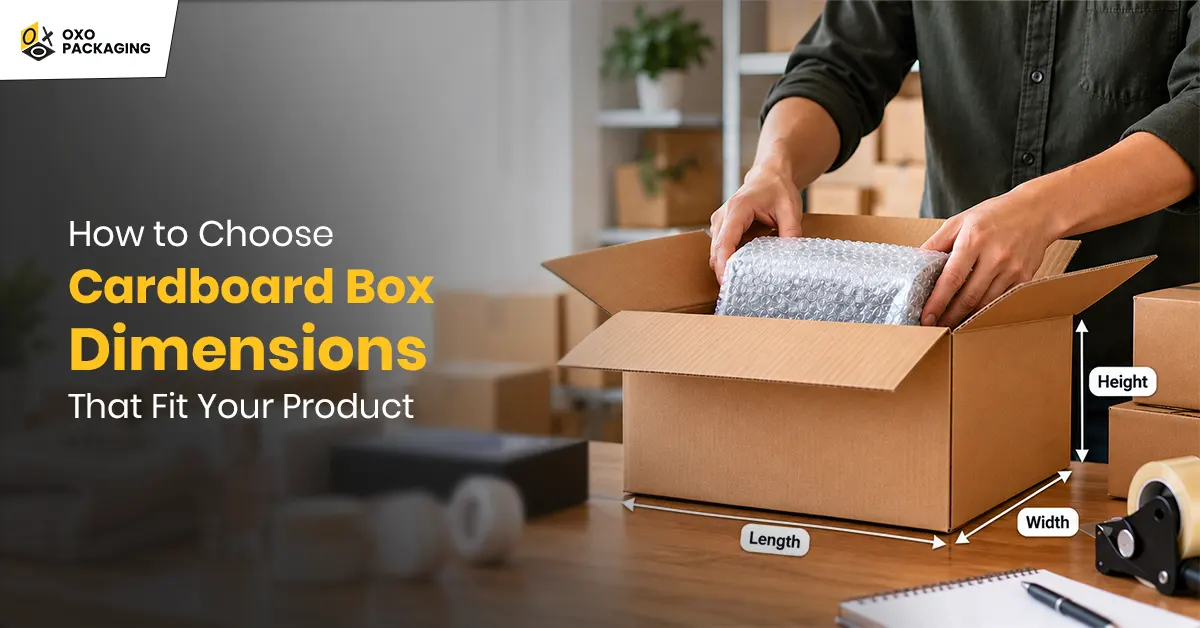
Choosing the right cardboard box dimensions is essential for protecting products, controlling shipping costs, and improving customer experience. A box that is too small can damage products, while an oversized box wastes materials and increases shipping expenses. The correct size provides a secure fit, supports safe transportation, and simplifies storage.
Whether you ship cosmetics, electronics, clothing, or fragile items, understanding box measurements helps you select packaging that meets your business needs. This guide explains how to measure products, calculate dimensions, choose suitable materials, and avoid common sizing mistakes.
Why Cardboard Box Dimensions Matter
Cardboard box dimensions affect product protection, shipping costs, warehouse storage, and packing efficiency. A properly sized box limits unnecessary movement during transportation and reduces the need for excessive cushioning.
For e-commerce businesses, dimensions can also influence dimensional weight pricing. Shipping carriers may calculate charges based on package volume rather than actual weight. Therefore, choosing a compact box can help businesses manage delivery costs without compromising product safety.
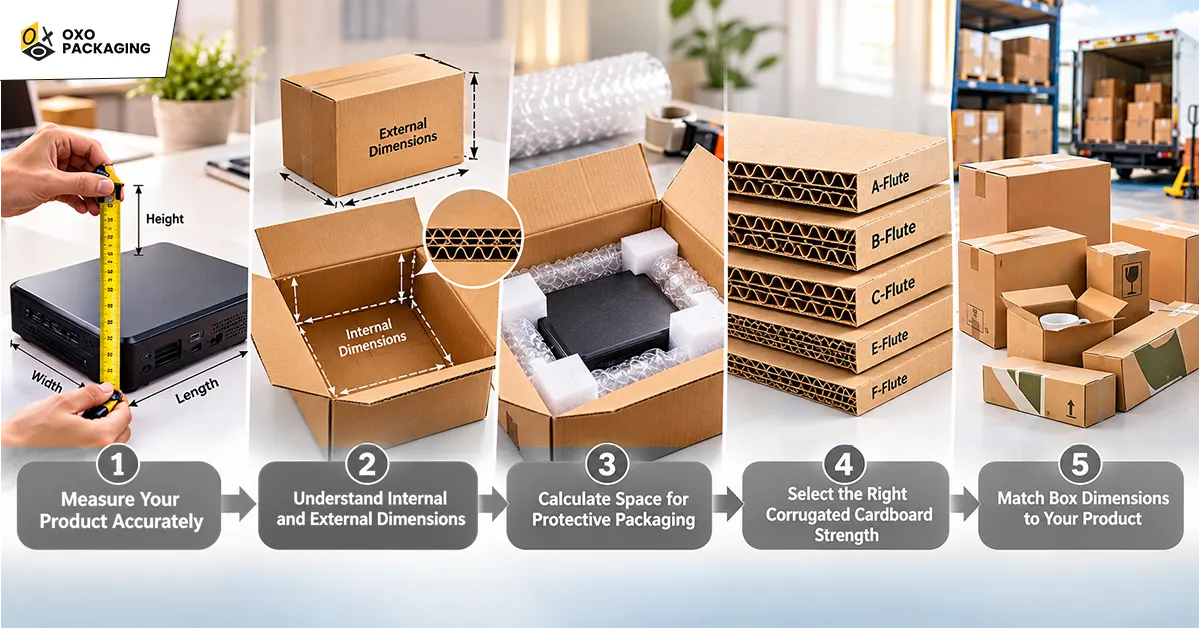
Step 1: Measure Your Product Accurately
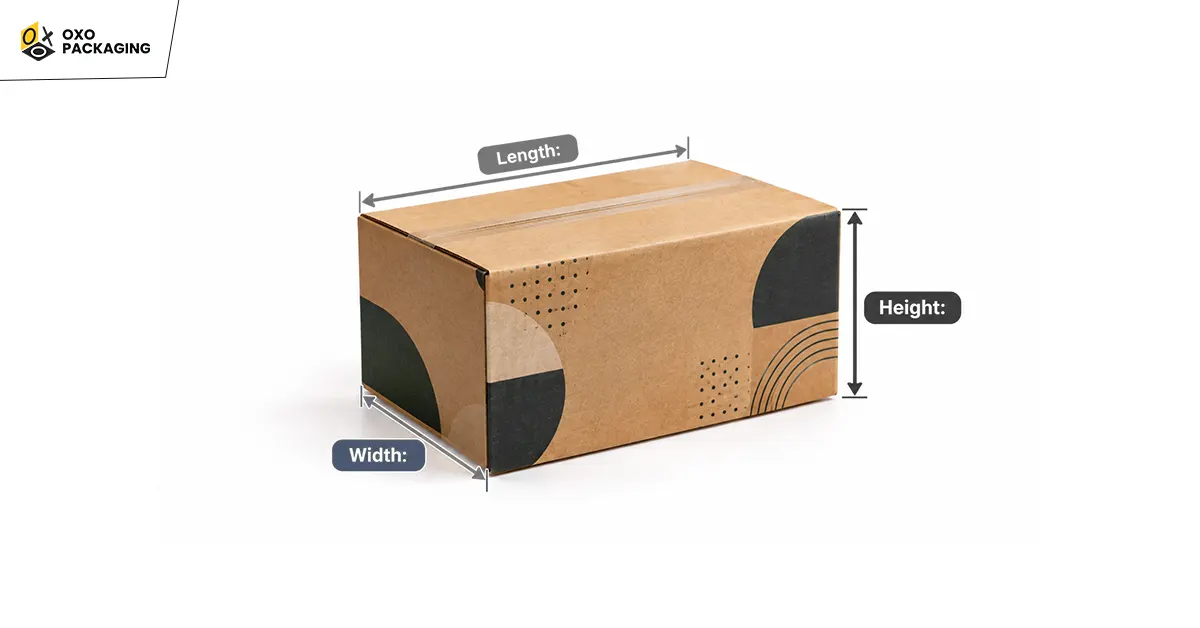
Start by measuring your product's length, width, and height.
- Length: The longest horizontal side.
- Width: The shorter horizontal side.
- Height: The distance from the bottom to the highest point.
Record measurements in consistent units, such as inches or centimeters. For irregularly shaped products, measure the widest, longest, and tallest points.
Include protruding components, handles, and accessories that will be packed with the product.
.
Step 2: Understand Internal and External Dimensions
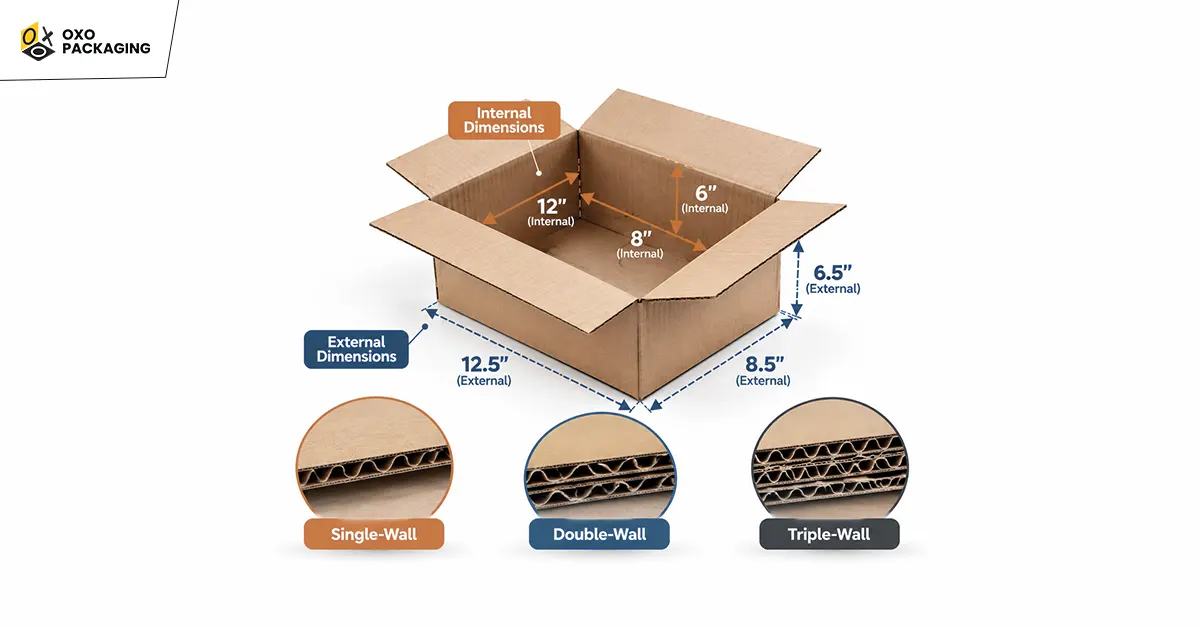
Internal dimensions describe the usable space inside a cardboard box. External dimensions measure the package from the outside, including the thickness of the corrugated board.
For example, a box with internal dimensions of 12 × 8 × 6 inches provides approximately that much interior space. Its external dimensions will be slightly larger.
Always confirm whether your supplier lists internal or external measurements before ordering.
Corrugated board thickness varies by flute profile and construction. Single-wall, double-wall, and triple-wall boxes can have different external dimensions even when their internal dimensions are identical.
Step 3: Calculate Space for Protective Packaging
The product should fit comfortably without pressure or unnecessary empty space. Fragile products may need room for cushioning materials.
Use this formula:
Required box dimension = Product dimension + Protective material allowance, on both sides
For example, a product measuring 10 × 6 × 4 inches that requires one inch of cushioning on every side needs approximately 12 × 8 × 6 inches of internal space.
This calculation assumes one inch of protection on each side. Actual requirements depend on the product's fragility, cushioning material, and shipping conditions.
I recommend testing the packed product to ensure that the protective materials remain effective during handling and transportation.
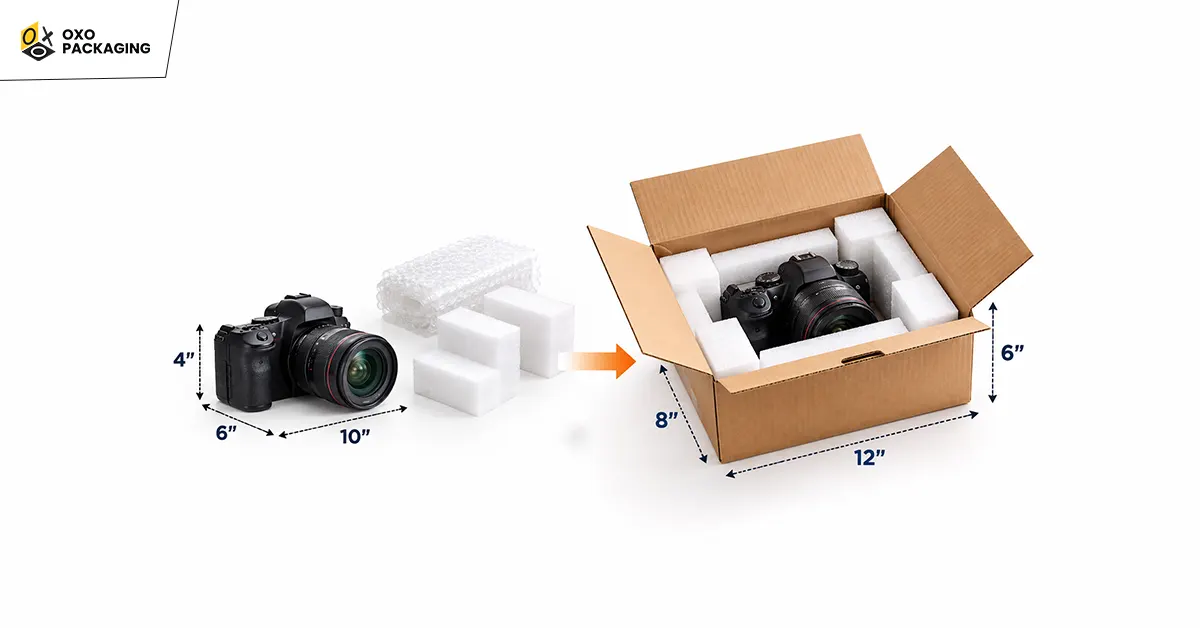
Step 4: Select the Right Corrugated Cardboard Strength
Box dimensions alone cannot guarantee product protection. The cardboard must withstand the product's weight, stacking pressure, and expected handling conditions.
Common options include:
-
Single-wall cardboard:
Suitable for many lightweight products and standard shipping applications.
-
Double-wall cardboard:
Provides additional structural support for heavier or fragile products.
-
Triple-wall cardboard:
Designed for demanding applications involving heavy products or greater protection requirements.
Corrugated flute profiles also influence performance. A-flute provides cushioning, B-flute offers good crush resistance, and C-flute balances cushioning with stacking strength. E-flute and F-flute are thinner options often used for compact packaging and retail presentation.
Choose board strength according to product weight, distribution conditions, and stacking requirements. For demanding shipments, consider box compression and edge crush test (ECT) ratings when evaluating packaging performance.
Step 5: Match Box Dimensions to Your Product
Different products require different packaging approaches based on their shape, weight, fragility, and presentation needs.
|
Product Type |
Sizing Consideration |
Packaging Approach |
|
Cosmetics |
Compact fit and presentation |
Small boxes with inserts |
|
Electronics |
Space for protective components |
Corrugated boxes with cushioning |
|
Glass products |
Adequate impact protection |
Strong boxes with dividers |
|
Clothing |
Folded dimensions and volume |
Lightweight mailer boxes |
|
Food product |
Product fit and packaging suitability |
Appropriate cartons or outer boxes |
For products sold in sets, measure the complete arrangement rather than sizing the box around one item. Dividers can help prevent individual products from colliding during transportation.
Common Mistakes To Avoid
Avoid these common packaging mistakes:
- Mixing up the size with the external size of the packaging.
- Picking packaging just because it is cheap instead of considering what kind of protection is needed.
- Leaving much empty space inside the package, which causes the product to move around and uses more materials than necessary.
- Not thinking about weight when trying to figure out the cost of shipping.
- Buying a lot of packaging before trying a sample first.
- Fixing these problems can cut down on wasted materials, stop the product from getting damaged, and make the packing process better and faster.
Measure the product's length, width, and height, then add the space required for protective materials. Confirm that the resulting measurements represent the box's internal dimensions.
Use internal dimensions to determine whether your product fits inside the box. External dimensions help calculate storage requirements and shipping measurements.
The required space depends on the product and cushioning material. Fragile items usually need more protective clearance, so test the complete packed box before shipping.
Yes, a smaller box that safely fits the product can reduce dimensional weight charges, cushioning fits the product requirements, and material use, depending on carrier pricing rules.