


Eco-Friendly Bags vs Plastic Bags: Which Is Better?
2026-10-06 06:52:35
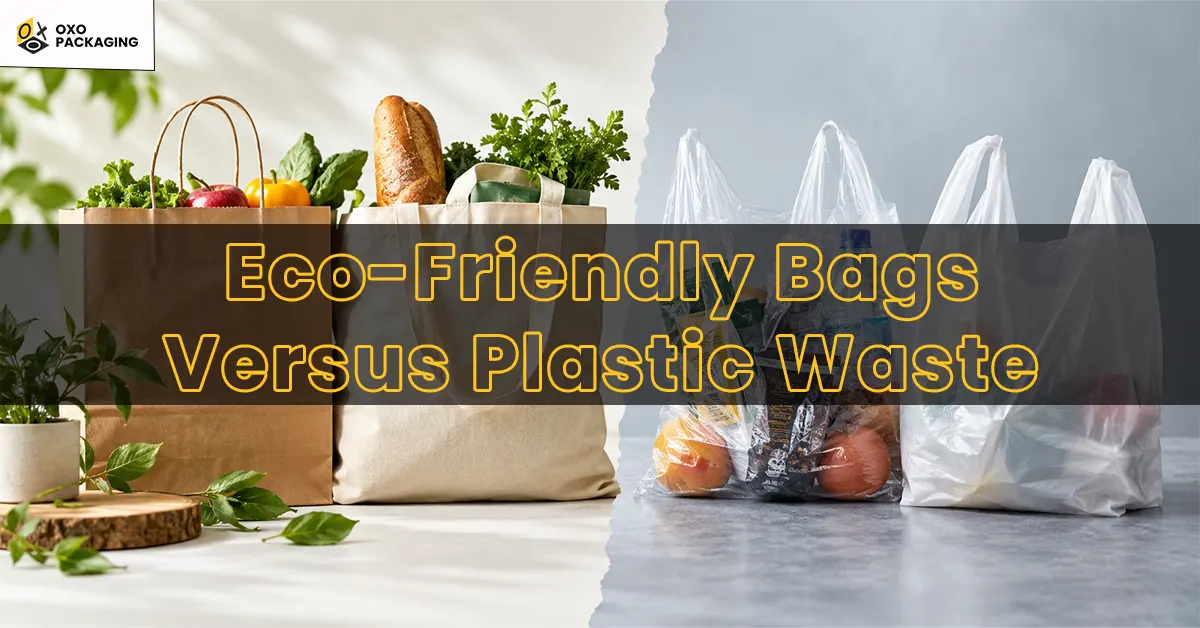
Packaging choices can shape both a brand’s image and its environmental impact. As businesses look for practical ways to reduce waste, the debate around eco-friendly bags vs. plastic bags has become increasingly relevant.
While plastic remains popular for its affordability and durability, sustainable alternatives offer businesses new ways to reduce waste and meet changing customer expectations. But which option makes more sense for different products and business needs?
In this article, we will compare their environmental impact, durability, cost, branding potential, and practical uses to help you understand the key differences. Read on to see which bag solution fits your packaging needs.
The Key Difference
Packaging choices affect more than how customers carry their purchases. They influence waste, resource use, brand perception, and, in some cases, the overall environmental footprint of a product. This has made the comparison between eco-friendly bags and plastic bags increasingly important for retailers, restaurants, e-commerce businesses, and product manufacturers.
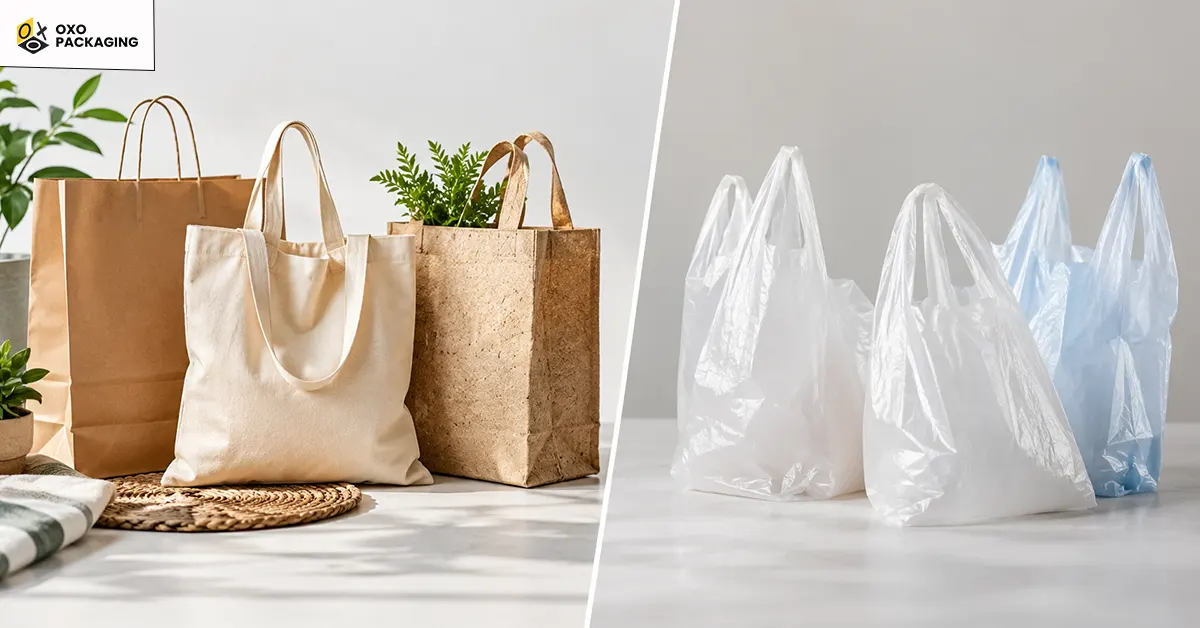
Traditional plastic bags remain popular because they are lightweight, inexpensive, and resistant to moisture. However, most single-use plastic bags have a short useful life and can persist in the environment for many years when they are not properly managed.
Eco-friendly bags take a different approach. They can use materials such as paper, recycled fibres, organic fabrics or other materials designed for reuse or improved end-of-life management. Their environmental performance still depends on how they are made, transported, used and disposed of.
The right choice therefore goes beyond simply replacing one material with another. Businesses need to consider the entire packaging journey.
How Plastic Bags Affect the Environment?
Plastic bags are usually made from polymers derived from fossil resources. Their low production cost and flexible construction have helped make them common across retail and commercial packaging.
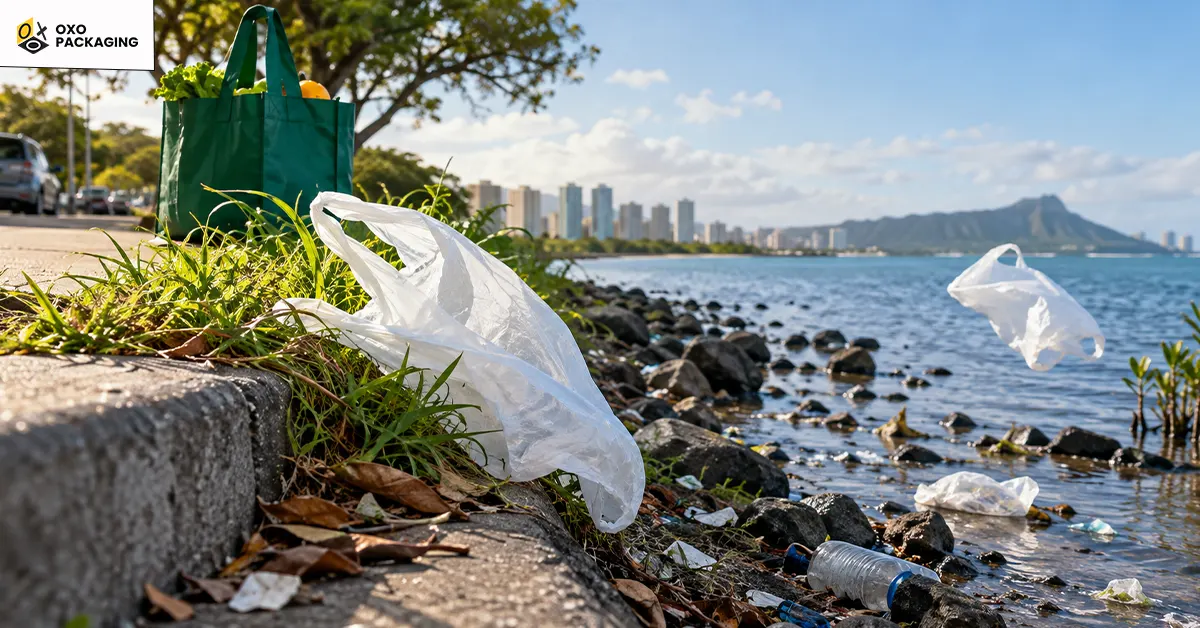
Their main environmental concern comes from their disposal. A lightweight bag can easily escape waste collection systems and enter streets, waterways, or natural environments. Plastic can fragment into smaller particles over time, contributing to the wider problem of plastic pollution.
Single-use packaging also creates a consumption pattern in which a product designed for minutes of use can remain in the environment for a much longer period.
That does not mean every plastic bag has the same environmental impact. Reusable plastic bags, recycled-content bags, and bags designed for repeated use can perform differently from thin single-use versions. Frequency of use matters, too.
This distinction is important when businesses compare packaging materials. The question should not simply be, "Is it plastic?" Instead, consider how much material the bag uses, how many times customers can use it, and what happens after its useful life.
Why Businesses Are Switching to Sustainable Bags
Customer expectations have changed. Many shoppers now pay closer attention to packaging waste and the materials used by brands. Businesses have responded by exploring packaging that supports their sustainability goals without sacrificing appearance or functionality.
Sustainable bags can also create a stronger connection between packaging and brand identity.
For example, a retailer selling handmade products may choose a natural-looking paper bag to reinforce its craft-focused image. A premium fashion business might select a durable reusable bag that customers can keep and use after the purchase.
This makes packaging part of the customer experience rather than simply a method of carrying products.
For businesses, the transition can also involve practical considerations such as material sourcing, printing methods, storage space, bag strength, and order quantities.
Paper Bags and Their Environmental Benefits
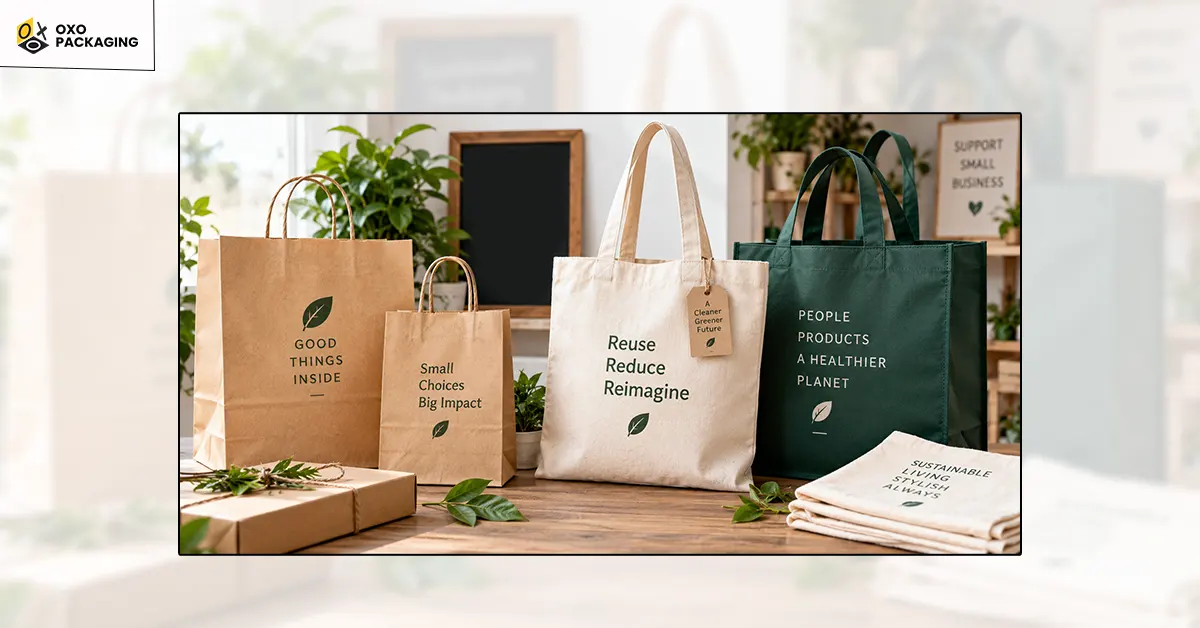
Paper bags are becoming popular in the market for several reasons. Some of their benefits are listed here:
- Natural Appearance: Offers a simple, natural look suitable for retail, food service, gifting, and takeaway applications.
- Reliable Strength: Kraft paper bags provide sufficient strength for many everyday products.
- Recyclability: Paper has established recycling streams in many regions, depending on local facilities.
- Excellent Printability: Provides a large printable surface for logos, colours, product information, and branding.
- Material Efficiency: Choosing the right paper weight can help reduce unnecessary material use.
- Reuse Potential: Bags can often be reused before recycling, helping extend their useful life.
- Versatile Applications: Suitable for a wide range of retail, food, and gifting needs.
Durability, Reusability and Everyday Performance
A packaging bag needs to perform its basic job: carrying products safely. Plastic performs well against moisture and can provide useful flexibility. Paper, meanwhile, offers rigidity and a familiar retail appearance. Neither material automatically wins every application.
For products exposed to moisture, air or light, businesses may require specialised packaging with stronger barrier properties. In these cases, flexible plastic-based formats can provide functions that ordinary paper cannot easily deliver.
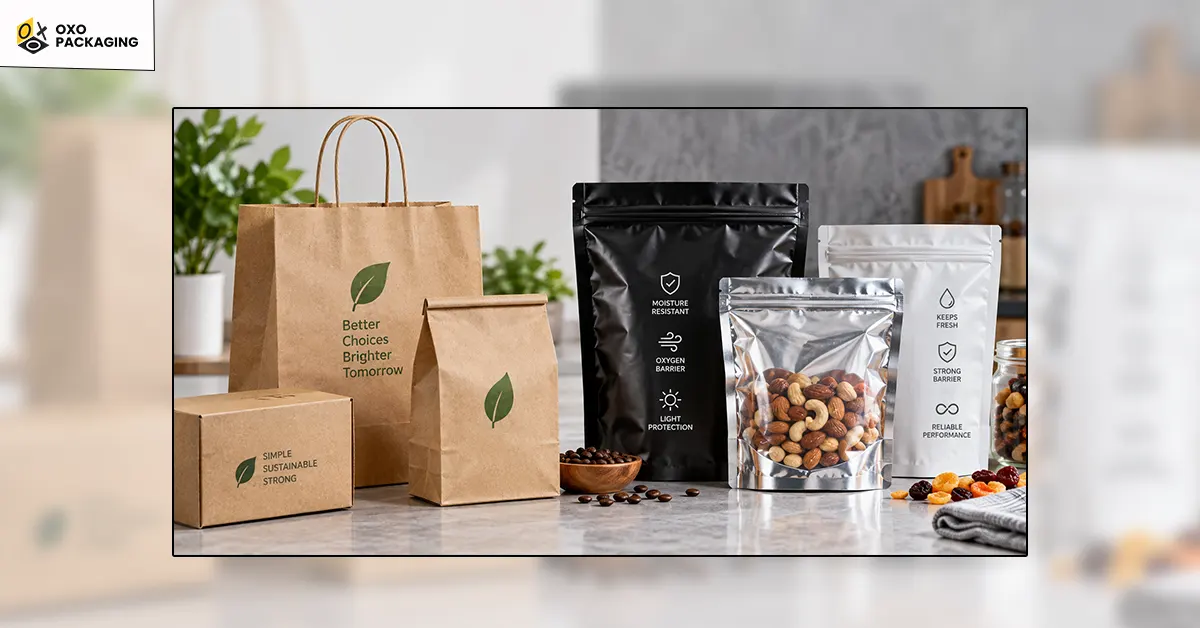
For instance, custom mylar bags can provide strong barrier protection for products that require resistance to moisture, oxygen or light. Their use demonstrates why packaging decisions should consider product requirements alongside environmental objectives.
Comparing Production and Disposal
Plastic generally uses fewer raw materials by weight because manufacturers can produce very lightweight bags. Paper bags can require more material to achieve comparable carrying strength. Transport also matters because heavier packaging can increase the resources needed to move large quantities.
End-of-life management creates another difference. Paper can usually be recycled where appropriate collection facilities exist. It can also break down more readily under suitable conditions. Plastic can be recycled in some systems, but thin film packaging may not be accepted through standard household recycling programmes.
Neither option should be judged only by its final disposal method. A bag that is reused many times can spread its environmental impact across multiple shopping trips. A poorly designed bag that customers use once can create unnecessary material consumption regardless of its material.
Cost and Branding Considerations
Price remains a major factor for businesses, particularly retailers that purchase packaging in large quantities.
Plastic bags have a low unit cost, especially when businesses purchase simple, unprinted versions in large volumes. Paper bags can cost more depending on their material weight, construction, printing and finishing. However, packaging also works as a branding tool.
Custom Paper bags can display a company's logo, colours and messaging while customers carry them through shops, offices and public spaces. This creates additional visibility without requiring a separate advertising format.
Businesses should therefore consider the total value of packaging rather than looking only at the purchase price. A durable, attractive bag that customers reuse can provide repeated brand exposure while reducing the need for replacement bags.
Which Bag Works Best for Different Products?
There is no universal bag for every product category. However, the ideal option can be selected based on the type of product you want to pack in these bags.
Retail Clothing
Paper bags work well for clothing stores because they offer a structured appearance and enough space for branding. Reinforced handles can improve carrying comfort.
Food and Takeaway Products
Food packaging requires greater attention to hygiene, moisture, grease and temperature. Businesses should select materials and coatings according to the food being packaged.
Gifts and Boutique Products
Premium paper bags can support a more refined shopping experience. Finishes, handles and customised printing can help create a distinctive presentation.
Heavy Retail Products
Heavier goods require stronger construction. Businesses may need thicker paper, reinforced handles or reusable bags rather than lightweight single-use options.
Moisture-Sensitive Products
Products that need strong barriers against moisture, oxygen, odours or light may require flexible packaging rather than conventional paper bags. The protective needs of the product should take priority over appearance alone.
Final Words
The comparison between eco-friendly bags and plastic bags is more complex than choosing one material as universally better.
Plastic can provide affordability, flexibility, and useful barrier properties. Paper and other sustainable alternatives can offer renewable or recyclable material options, strong branding opportunities and a different end-of-life profile.
If you are looking for a reliable packaging supplier in Australia to buy paper or plastic bags, you can reach out to OXO Packaging.