


Explore Everything About Paper Weight Conversion GSM to LB
2026-01-13 12:11:00
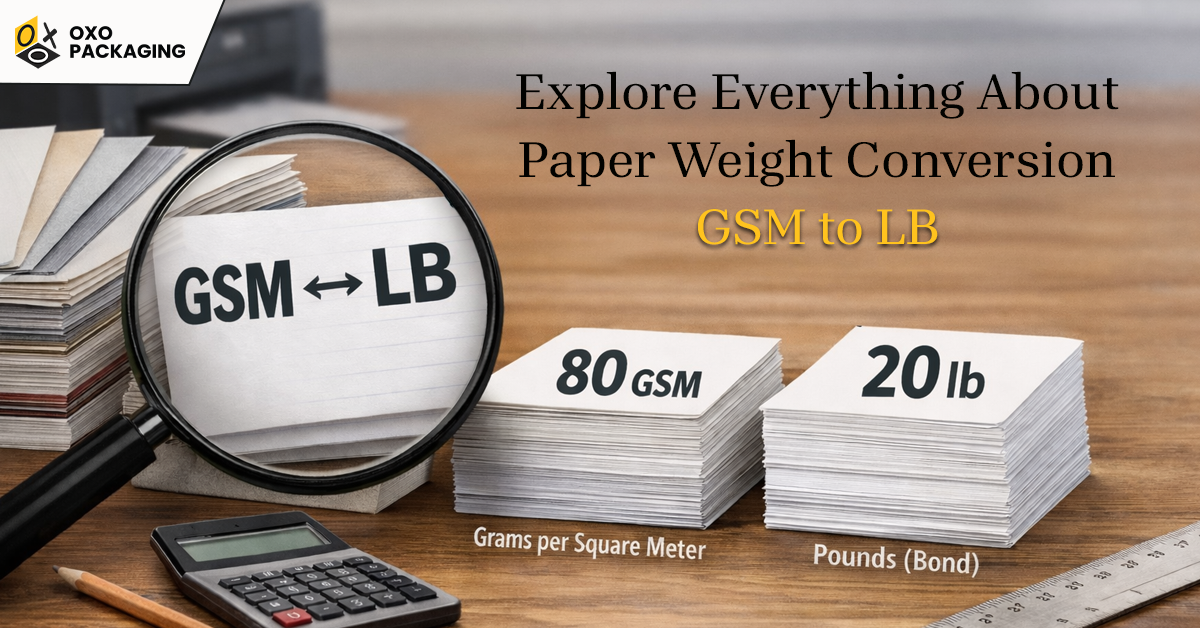
Whether you want sharp or precise printing results, choosing the right paper is essential. Keep in mind to consider not only the look or feel of the paper. But also the right weight and thickness while choosing suitable paper for printing. But it isn’t as simple as it seems.
Because understanding paper weights and thickness can be confusing, especially when considering weight conversion between GSM and lb. So, read this blog to make your decision easier and understand paper weight conversion in detail!
An Overview of Paper Weight and Thickness
While you are on the verge of printing a book, box, card, flyer, booklet, brochure or catalogue, it’s important to understand the thickness of paper best suited to your needs. However, it might get complicated if your printing project needs more than one type of paper.
For example, a hardcover book with casing, interior pages, and endpapers. In such instances, you can measure the thickness of paper by its weight. Usually, two weight measures are used to measure paper thickness, which are:
- Gsm (grams-per-square-meter)
- Lb (pounds)
The choice of these metrics varies by geographical regions. Apart from America, lb is commonly used while Gsm is a popular choice in other regions, including Australia. Have a quick look at both of these weight metrics:
What is meant by “GSM”?
“Gsm” simply refers to “grams per square meter.” It is the standard global unit of measurement for paper weight and density, showing how much one square meter of paper weighs in grams. A GSM unit directly relates to the thickness and durability of paper, where a higher GSM value generally means thicker, heavier, and more premium-quality stock.
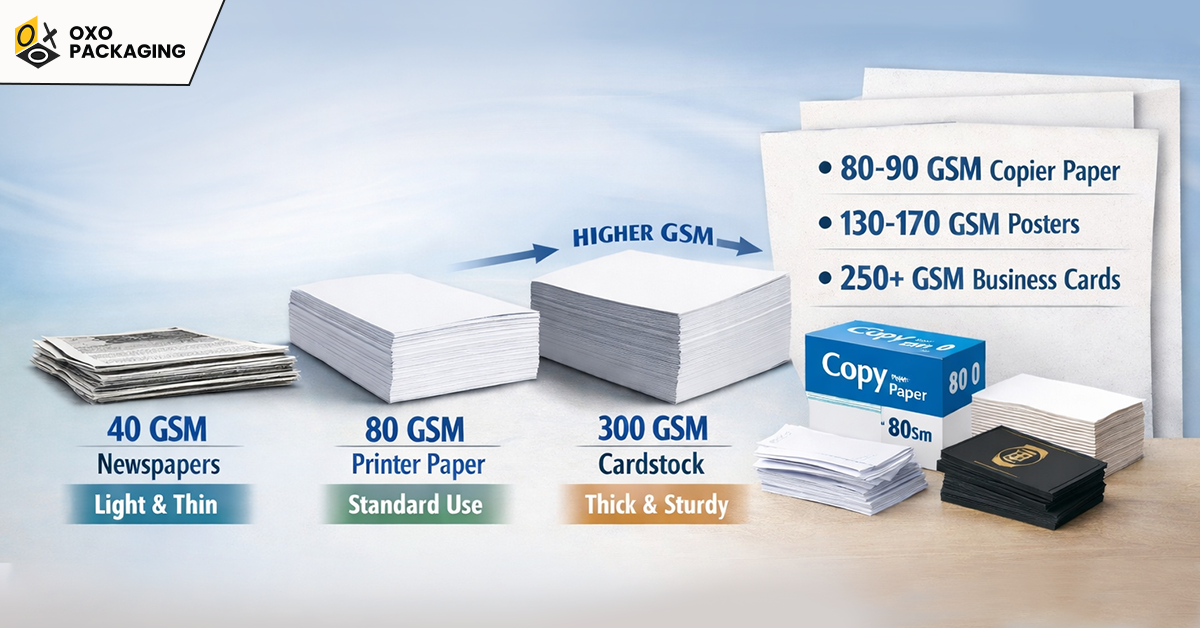
Higher Gsm shows a more substantial, rigid paper, e.g. 300+ Gsm for cardstock. However, lower GSM shows thinner, lighter paper, e.g. 35-55 GSM for newspapers. It helps determine the appropriate paper for specific needs, such as:
- 80-90 GSM for standard copiers
- 130-170 GSM for posters
- 250+ GSM for business cards
What is Meant by “LB”
The unit lbs (pounds) in paper measurement refers to the weight in pounds of a ream of 500 sheets of a specific, uncut basic of that paper type. This system is commonly used in the United States. Put simply, lb number is not the weight of the package you buy in the store, but rather a legacy measurement based on the original and uncut size of paper at the mill.
For example, a standard ream of 20 lb letter size (8.5" x 11") copy paper actually weighs about 5 pounds. The main source of confusion is that the basic or parent sheet size varies depending on the type of paper, e.g. bond paper or cover paper.
It is because the type of paper matters when calculating lb weights, as each paper has its specific calculation rule depending on whether it’s bond, text, cover, or another type. Each type has various standard sizes known as “parent sheets.”
- Standard copy paper or bond paper has a basic size of 17" x 22"
- Cover paper or cardstock has a different basic size, such as 20" x 26"
- The Bristol paper has a standard size of 22.5″ × 28.5″
- Text paper has a standard size of 25″ × 38″
- Index paper has a size of 25.5″ × 30.5″
However, if you find the same amount of 80 lb paper, you might consider that 80 lb cover paper is heavier than 80 lb text paper due to their different dimensions.
Tidbit: 1 square meter sheet of cover paper (80 lb) weighs 217 g > 1 square meter sheet of text paper (80 lb) weighs 118 g
Importance of Paper Weight and Thickness
The weight and thickness of paper matter because they determine the feel, durability, print quality, and cost of the document. For example, heavier, thicker paper provides a premium and sturdy feel. However, lighter paper is more economical and flexible for high-volume jobs. These factors affect ink absorption, printer compatibility, and shipping costs. Have a look at the following examples:
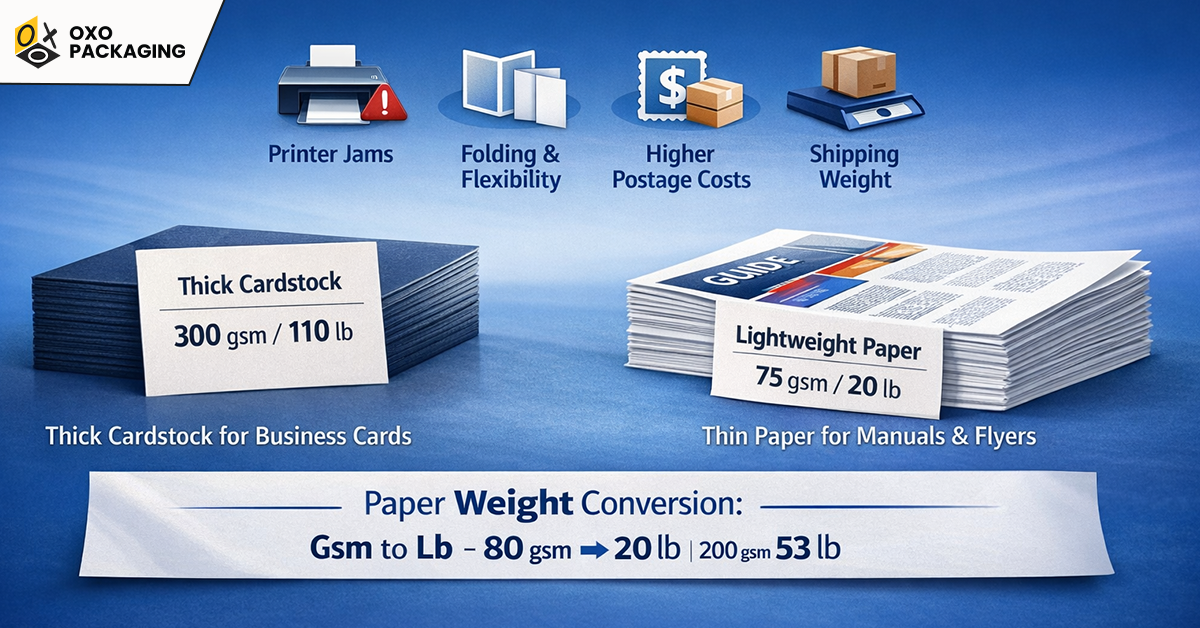
- Heavier, thicker paper (such as cardstock for business cards) communicates professionalism and quality.
- Conversely, thinner paper is ideal for high-volume items like manuals or everyday flyers.
- Extremely thick paper may cause printer jams, while paper that is too thin might not feed properly.
- Thickness affects how a document folds; thinner paper is better for brochures, while rigid cardstock is necessary for postcards.
- Heavier paper increases postage expenses for catalogues, magazines, and mailers.
Since you understand the importance of paper thickness, you will also need to convert paper weights from Gsm to Lb. Let’s dive deep into that:
Conversion Formula from LBS to GMS
Cover paper and interior paper demand different conversion formulas. Such as:
- 1 lb of Text paper weighs 1.48 GSM. So multiply each pound by 1.48. It equals 118.4 gsm.
- 1 lb of Cover paper weighs 2.708 gsm. So multiply each pound by 2.708. It equals 216.64 gsm.
Consider Common LB to GSM Conversions
|
|
|
|
|
|
|
|
|
|
|
|
|
|
|
|
|
|
|
|
|
|
|
|
|
|
|
|
|
|
|
|
|
|
|
|
|
|
|
|
|
|
|
|
|
Conversion Formula from GMS to LBS
Cover paper and interior or text paper also demand different conversion formulas when converting Gms to Lb.
- 1 gsm of Text paper weighs 0.676 lb. So multiply each gsm by 0.676. It equals 106.1 lb.
- 1 gsm of Cover paper weighs 0.369 lb. So multiply each gsm by 57.9 lb. It equals 57.9 lb.
Consider Common GSM to LB Conversions
|
|
|
|
|
|
|
|
|
|
|
|
|
|
|
|
|
|
|
|
|
|
|
|
|
|
|
|
|
|
Explore Different Types of Paper Thickness Charts
Paper thickness charts show different measurement systems in mm and inches for various paper types like offset, gloss art paper, and grayboard to help users select the right paper:
Offset Paper Thickness Charts
|
|
|
|
|
|
|
|
|
|
|
|
|
|
|
|
|
|
|
|
|
|
|
|
|
|
|
|
|
|
|
|
Gloss Art Paper Thickness Charts
|
|
|
|
|
|
|
|
|
|
|
|
|
|
|
|
|
|
|
|
|
|
|
|
|
|
|
|
|
|
|
|
|
|
|
|
Matte Art Paper Thickness Charts
|
|
|
|
|
|
|
|
|
|
|
|
|
|
|
|
|
|
|
|
|
|
|
|
|
|
|
|
|
|
|
|
Conclusion
Until now, you have known how paper choice impacts the quality of your printed product. It’s better to consult experts when you are about to start a print project. OXO Packaging is one of those experts who provide the latest printing technologies for a vast range of paper options. Contact us today and bring your brand vision to life using our cutting-edge printing techniques!
250 GSM paper is a sturdy, thick cardstock commonly used for flyers, brochure covers, and premium postcards. It typically equates to roughly 90-92 lb cover stock (US) or 66 lb bond.
300 GSM is thicker and heavier than 200 GSM. GSM (grams per square meter) measures paper weight; higher numbers indicate greater thickness, rigidity, and durability.
80 g/m² is exactly 80 GSM (Grams per Square Meter). A single sheet of paper with an area of exactly one square meter that weighs 80 grams has a grammage of 80 GSM.
100 lb paper generally converts to 270–271 GSM for cover stock and roughly 148–150 GSM for text stock such as booklet paper.