


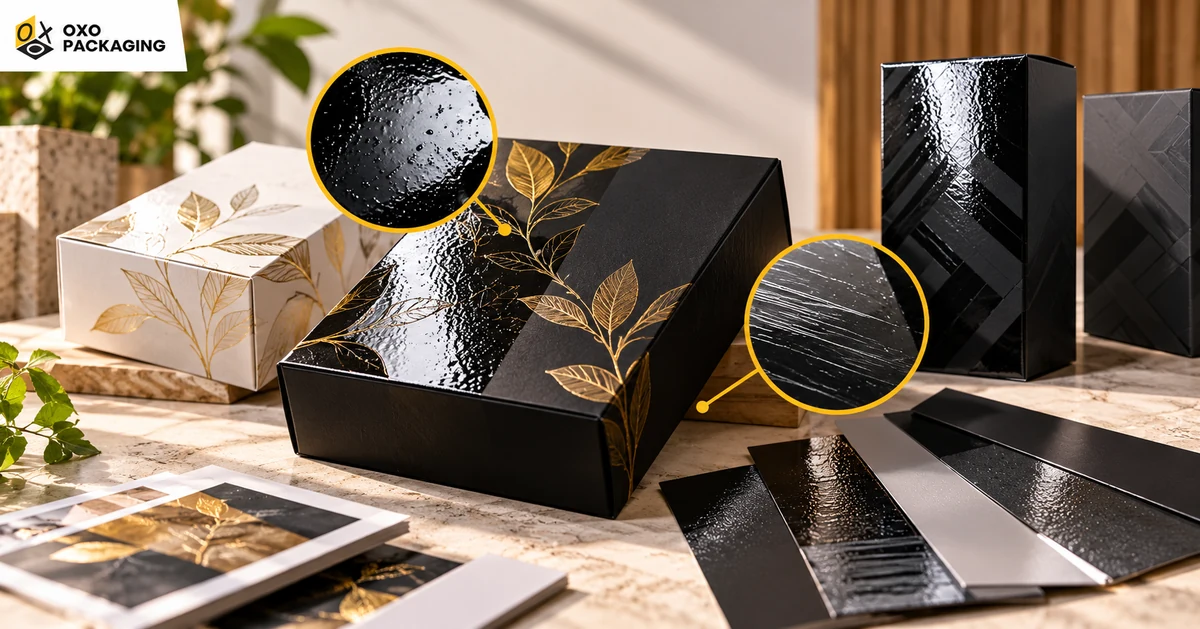
UV coating in printing provides amazing benefits to the printed materials from curing the printed text to the enhancement of the aesthetic appeal. It offers premium finishing for the high-end packaging and printed materials to boost the presentation and at the same time protect the quality of the printed work.
However, it also has its own limitations. On the other hand, continue to read this blog so you might learn it in detail and know whether you should choose it for your printed outcome or not.
Creating Tactile Unboxing Appeal with UV Coatings
A high-quality print finish has the power to dictate brand perception and enhance tactile unboxing appeal. UV coating is a liquid and transparent coating applied to the printed materials surface and instantly secures the content and the surface.
This blog is aimed to provide you with a deep insight and learning about the types, benefits, drawbacks, and practical industrial uses of the UV coatings in printing.
UV Coating Types and Their Packaging Uses
UV coating enjoys a variety of types to choose from that perfectly resonate to your custom requirements. The following are the main types that are mostly used, and in common practice in the industrial trends:
- High-Gloss UV: High-gloss UV delivers a brilliant, wet-look shine; ideal for luxury cosmetic and promotional cartons.
- Matte UV: This type of UV offers a velvety, low-glare texture; minimizes reflections and suits modern minimalist designs.
- Spot UV: Spot UV Create a striking contrast against a matte background by applying spot UV coating selectively to specific logos, images, or text fields;
- Raised 3D / Orange Peel UV: This is an awesome choice to add tactile, physical depth and sensory textures for special packaging effects.
- Pearlescent UV: It infuses shimmering metallic or steel flecks and it is popular to create high-end beauty and gift packaging.
Difference Between UV Coating and Lamination
UV coating and lamination are amazing protective shields against the printed work and both are widely used for different needs and requirements. However, they have some distinctive features and can be preferred over the other, and vice versa. For your convenience and broader view, you can consider the following table with the distinctive features of both of the coating and lamination:
Table: Difference UC Coating and UV Lamination
|
Feature |
UV Coating |
Lamination |
|
Application Method |
Liquid polymer is applied by spraying or flooding onto the surface and instantly cured using ultraviolet (UV) light. |
A physical sheet or layer of clear plastic film like polyester or polypropylene is bonded via heat or pressure. |
|
Thickness & Flexibility |
It is very thin and lightweight; ideal to preserve the natural, card-like flexibility of the underlying paper. |
It is thicker and more rigid; adds a distinct plastic feel and structural weight to the printed piece. |
|
Durability & Protection |
It guards well against scuffs, fingerprints, dust, and mild moisture. |
It provides superior, heavy-duty resistance against tears, water, grease, and outdoor weathering. |
|
Post-Processing |
It can be glued, stamped, or folded immediately after curing (though heavy coatings may crack on sharp, tight creases). |
Lamination resists folding and bending cracks much better than thick coatings, but requires manual or machine edge trimming. |
Benefits of UV Coating
UV coating can perform best in a variety of situations for the protection of the printed text, saving costs, and offering design flexibility. The following are some amazing benefits that you can gain by using UV coatings to meet your certain requirements:
- Instant Curing: UV coating dries at speeds up to 800 feet per minute with near-zero waiting time and hence an ideal solution for the instant curing.
- Enhanced Visual Appeal: It deepens dark colors, boosts contrast, and creates a high-vibrancy "wet look" and instantly grabs attention of your prospects.
- Surface Protection: Keep your products clean by resisting scuffs, light scratches, dust, and fingerprints during handling.
- Cost Efficiency: It offers cost efficiency by eliminating film lamination steps, reducing unit cost and turnaround delays.
- Design Flexibility: It provides you both choices to flood (full-surface) or spot applications that perfectly suit your brand.
Common UV Coating Problems and How to Fix Them
Despite the fact that UV coasting is an awesome choice for various reasons, yet it can create problems, and at the same, we have solutions to tackle these issues. The following points can efficiently explain the problems that might arise and how to fix them:
- Incomplete Curing (Tacky surface): To fix this issue you should increase UV lamp power, slow down line speed, or reduce coating thickness.
- Poor Adhesion: To cure such problems, you can apply specialized primers or use corona pre-treatment on difficult substrates.
- Bubbling or Pinholes: It is a drastic problem and can be effectively managed by adding defoamers to the liquid formula or lower pump/roller speeds.
- Crease Cracking: Simply adjust coat weight lower near fold lines or switch to a spot-coating gap on the score line.
8 Major Industries Using UV Coating
- Printing and Packaging: UV coating is considered an ideal choice and hence is used for luxury gift boxes, cosmetic cartons, food packaging, brochures, and marketing collateral.
- Wood and Furniture Manufacturing: For the durability, high-quality, and other amazing features, like it provides hard, scratch-resistant, and chemically durable finishes for wooden cabinets, tables, and flooring, UV coating is chosen.
- Electronics and Consumer Devices: UV coating acts as an insulating, anti-scratch clear layer on smartphone casings, wearable tech, and control panels.
- Telecommunications & Printed Circuit Boards: For the amazing results, this type of coating and finishing, UV-curable conformal coatings to protect delicate motherboards, 5G base stations, and routers, is taken as a priority.
- Medical and Healthcare Devices: Applied to specialized medical equipment housings and diagnostic device interfaces for durability and chemical resistance.
- Optical Fibers: This coating protects glass fibers with dual-layer UV buffers and cushions to prevent micro-bending and physical damage during handling.
- Advertising and Signage: Specialized UV coating delivers weather-resistant, fade-proof outdoor and indoor displays, window clings, and promotional graphics.
- Personalized and Specialty Goods: An awesome choice for the coating, UV coating, powers direct-to-object digital UV printing on items like custom pens, phone cases, keychains, and awards.
Conclusion and Best Practice Recommendations
Both the UV coating and UV lamination are excellent choices to use on different requirements. UV coating is excellent where you need to choose for the budget friendly needs, high gloss visual pop, fast turnaround on rigid or heavy weight stock requirements.
However, UV lamination is excellent where you need heavy duty physical protection, tear resistance, and zero cracking on folded or frequently handled items. Choose the ideal one that perfectly fits your printing, packaging, or other requirements.
The prime objectives of using UV coating is to provide surface protection of the printed matter, visual enhancement of the products, and instant curing and efficiency boosting for the brand image. Spot UV is mostly used to spot emphasis and it is also an environmentally friendly choice for printing.
Full-flood UV is used to cover the entire surface, creating a consistent, high gloss shine across the whole surface. It is best for overall vibrancy, giving a uniform sheen, and providing complete protection against mirror scuffs and fingerprints.
While the spot UV focuses on the selectively specific, targeted areas to create a high-contrast look while making the coated elements glossy, and leaving the remaining area flat or un-glossed. It is best for drawing eyes on key brand elements, adding tactile or 3D raised effects, and creating a luxury feel,
UV coating is an excellent choice for the printing protection, yet it has many limitations and drawbacks. Some of them include, physical and application limitations such as curing depth and shadow areas, surface defects, and paper and substrate distortion.
It further includes post-processing and compatibility issues like writing and stamping difficulties, foil stamping and inks incompatibility, and color and pigment interference. Still, cost and operational challenges, e.g., higher initial investment and brittleness are there to face.