


Wondering What Are the Coloured Dots on Packaging? Read Here
2026-08-25 07:14:36

Have you ever picked up a cereal box, snack bag, frozen-food package, or candy wrapper? And noticed a few tiny colored circles or squares along its edge? You may have wondered whether those marks reveal something about the product, perhaps its ingredients, flavour, production batch, or quality.
In reality, those little marks usually have nothing to do with what's inside the package. Instead, they are mainly part of the commercial printing process. Let's figure out the real meaning behind those mysterious colored dots.
What Do the Colored Dots on Packaging Mean?
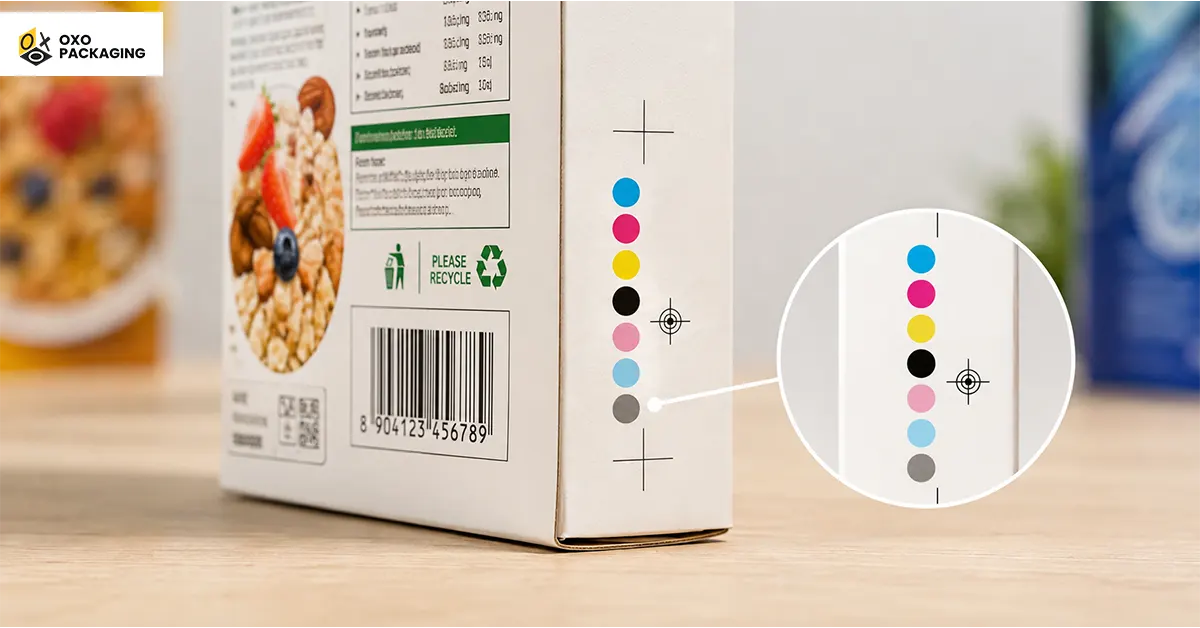
The colored dots you see on packaging are generally printing-control marks. They provide printers with a quick visual reference for checking whether the inks being applied to the packaging are producing the intended results.
Rather than communicating information to shoppers, they are designed primarily for people operating and inspecting the printing equipment. In other words, those dots aren't a secret product code. They are part of the quality-control system behind the packaging you see on store shelves.
Depending on the printing process and artwork, these marks may appear as circles, squares, rectangles, lines, or groups of colour patches.
Why Are Coloured Dots Used in Packaging Printing?
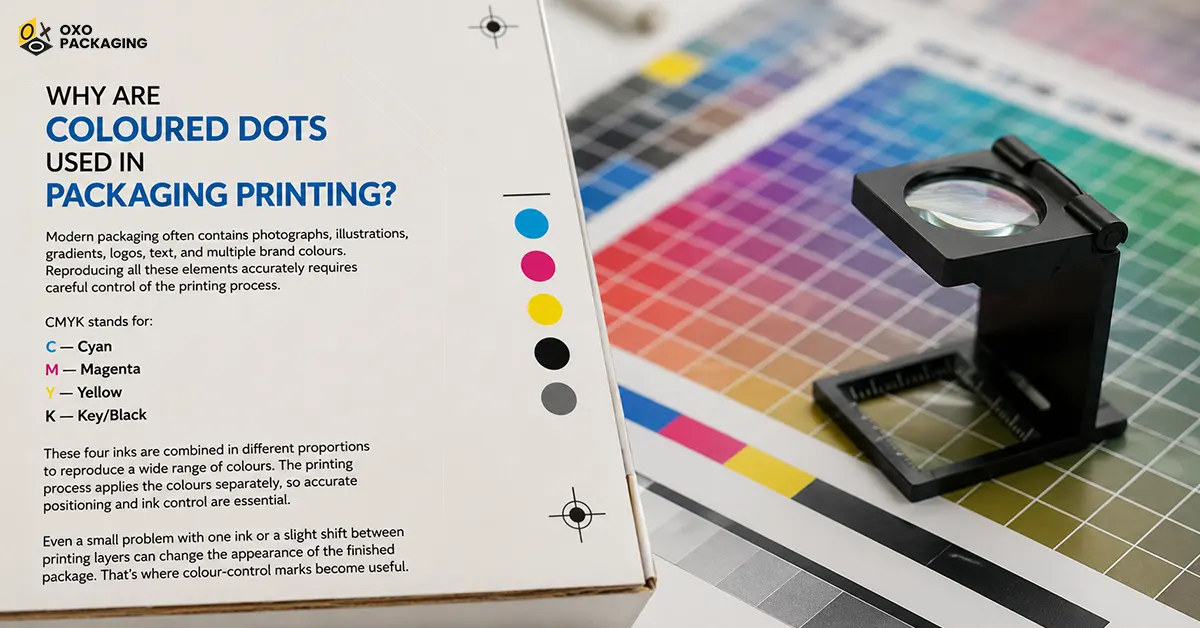
Modern packaging often contains photographs, illustrations, gradients, logos, text, and multiple brand colours. Reproducing all these elements accurately requires careful control of the printing process. One of the most common systems used for commercial printing is CMYK. CMYK stands for:
- C — Cyan
- M — Magenta
- Y — Yellow
- K — Key/Black
These four inks are combined in different proportions to reproduce a wide range of colours. The printing process applies the colours separately, so accurate positioning and ink control are essential.
Even a small problem with one ink or a slight shift between printing layers can change the appearance of the finished package. That's where colour-control marks become useful.
What Information Do These Printing Marks Provide?
The colored dots on product packaging are technical printing guides called process control patches or printer's colour blocks. They help:
Check Colour Accuracy
Printers need to make sure the colours appearing on the package match the approved artwork or production standard. A colour patch gives the press operator a reference point. If an ink appears noticeably weaker, darker, lighter, or otherwise inconsistent, adjustments can be made during production.
This becomes especially important for brands that need their packaging to look identical across multiple production runs.
Monitor Ink Density
Printing isn't simply about having the correct ink colour. The amount of ink applied also affects the final appearance. Control patches can help operators evaluate ink coverage and density. If the printed result isn't meeting the required standard, the press settings can be adjusted.
This is particularly important during long production runs, where maintaining consistent output can be challenging.
Detect Registration Problems
Packaging artwork may require several colours to be printed in separate stages. These layers need to line up correctly. This alignment is known as registration. When printing layers don't line up properly, images can appear blurry, edges may look distorted, and unwanted colour fringes can become visible.
Registration marks provide printers with a reference for checking whether the different printing components are correctly aligned.
Maintain Consistency
Imagine producing 100,000 snack wrappers. The first package and the last package should look essentially the same. Without appropriate quality controls, colour variation could occur throughout a lengthy production run.
Colour-control patches give printing teams a practical way to monitor production and make adjustments when necessary.
Are the Dots Always Red, Blue, Yellow, and Black?
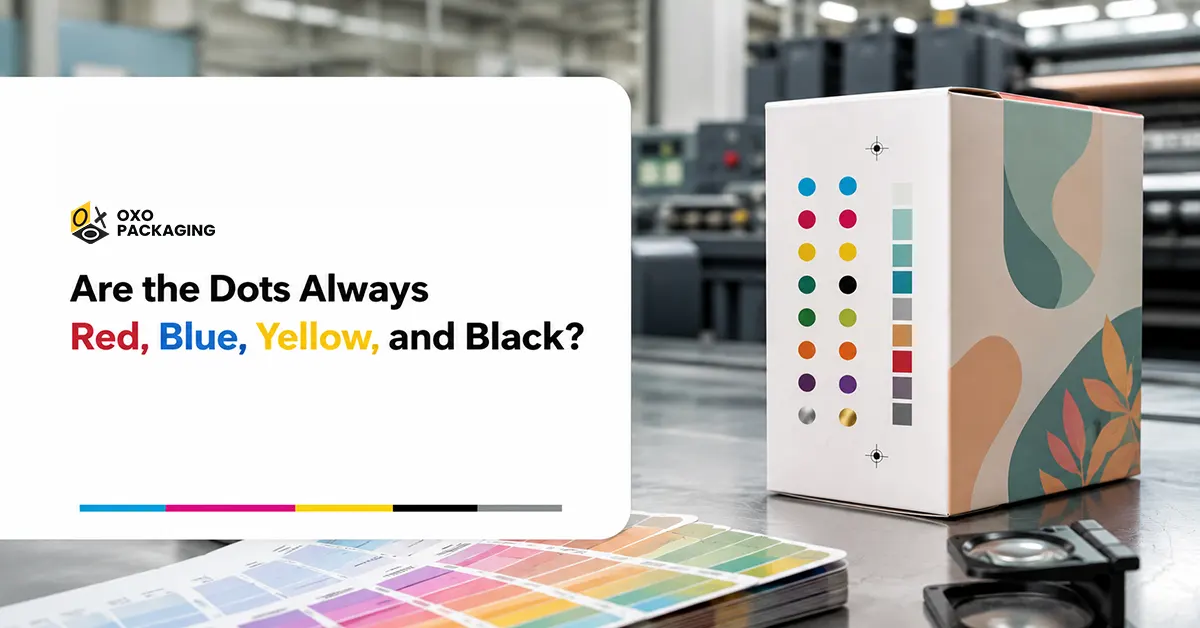
Not necessarily. Although CMYK is widely used, packaging doesn't always rely exclusively on those four inks. A package may use spot colours, Pantone colours, metallic inks, or additional specialty colours. In such cases, the control patches can reflect the inks being used for that particular print job.
That's why you might see different combinations of colours on different packages. The number, position, and appearance of the marks can vary depending on the artwork, printing equipment, substrate, and production requirements.
Why Are Some Dots Visible on Finished Packaging?
In professional printing, many control marks are placed outside the intended finished area and are removed during trimming. However, you may still notice them on certain products, particularly flexible packaging such as bags, pouches, and wrappers.
Some printing processes use continuous rolls of material, and certain marks may remain visible depending on how the material is converted or trimmed. So if you spot a row of colored squares on the edge of a package, it doesn't necessarily mean something went wrong.
Don't Confuse Colour Dots With Other Packaging Marks
Packaging can contain several different technical marks, and they don't all serve the same purpose:
- Colour-control patches help monitor ink and colour reproduction.
- Registration marks help verify alignment between printing layers.
- Crop or trim marks indicate where printed material should be cut.
- Bleed areas provide additional artwork beyond the final cut line so unwanted white edges don't appear after trimming.
These elements work behind the scenes to help transform a printed sheet or roll of material into finished packaging.
Do Colored Dots Indicate Ingredients or Product Quality?
This is one of the biggest misconceptions surrounding these marks. The colored circles aren't a standard system for identifying ingredients, preservatives, expiration dates, allergens, flavours, or nutritional quality. Their primary purpose is connected to printing and production control.
So the next time you see four colourful circles on a food wrapper, you don't need to decode them before deciding whether to buy the product.
Why Should Brands Care About These Tiny Marks?
The dots are mostly an interesting piece of packaging trivia for consumers. But for brands, the printing controls behind those marks can have a much greater significance.
Packaging is often one of the most visible representations of a brand. If a company's signature colours look different from one production run to another, the packaging can appear inconsistent and less professional.
Reliable colour management helps brands maintain a recognisable visual identity across boxes, labels, pouches, cartons, and other printed materials. It also gives packaging teams and printers a way to identify potential problems before thousands of units reach the market.
Final Thoughts
The next time you see a row of tiny colored marks on a cereal box or snack wrapper, you'll know there's more to them than meets the eye. They aren't telling you what's inside the package. They're helping make sure your package looks exactly the way it was designed to look.
Colour dots mean different things depending on where you see them. They can represent printer ink checks on food boxes, golf club angles, or tyre balance points.
Those colored dots on product packaging are printer colour blocks or process control patches. They show the ink colours used to print the design.
The colored dots on the bottom of beverage cans are factory tracking marks used for quality control. They identify which specific machine or spray nozzle applied the protective interior lining to each can.
The colored dots on a chip bag are printer's colour codes used by manufacturers to check ink density, saturation, and colour consistency during the printing process.