


How Thick is Cardboard? | Variations, Features & More
2026-11-13 12:29:45
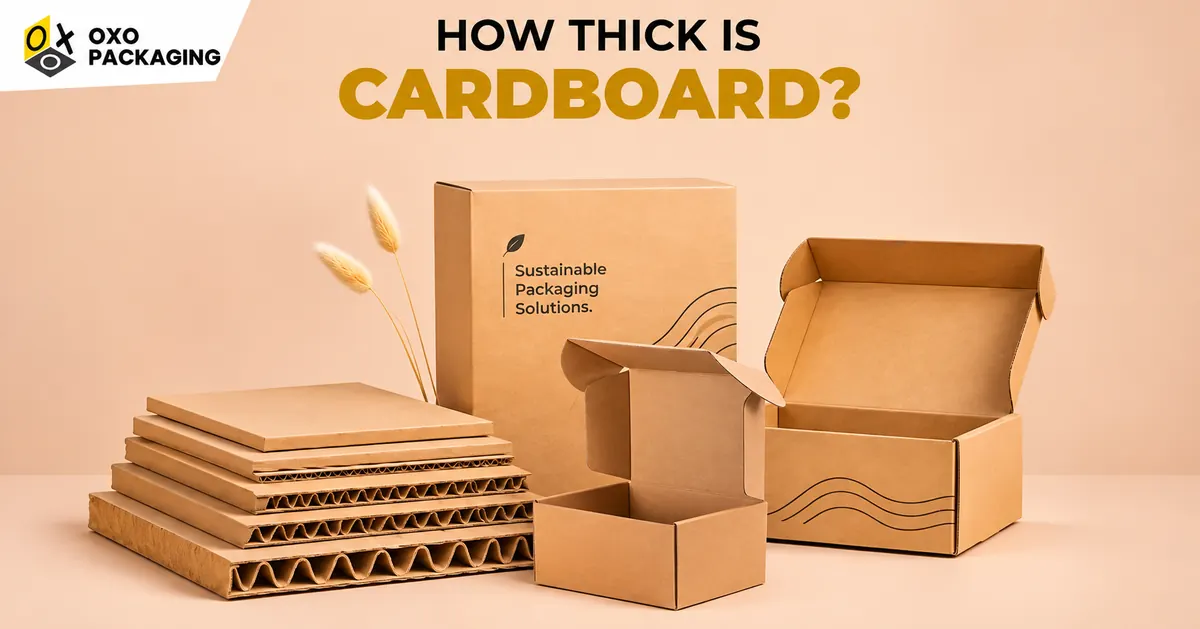
Packaging materials set the reliability of boxes as it’s the core component. If the material is unreliable and made from low-quality ingredients, this can cost a business a lot as the packaging can be compromised during transit. That’s why here in this article we’ll explore the cardboard material in detail and how it can upgrade your packaging game. So, let’s read on.
Cardboard Thickness & Its Role in the Packaging
The thickness of the cardboard isn’t due to a manufacturing flaw, but it’s developed intentionally to ensure the packaging remains top-notch. For instance, some boxes are crafted with a thin layer of cardboard as the product doesn’t demand much sturdiness. While for some items, thick boxes are considered as they maximise the protection against the elements that can cause damage to the packed products.
Below are some of the perks of cardboard boxes and how they can be the best consideration for the packaging needs of your brand.
Safer Shipping
First of all, the scratchless delivery of any product is the ultimate goal of the brand as it sets the rest of the branding perception. If the item gets damaged in the middle of the way, there’s a high chance that the customer won’t make the purchase again.
Meanwhile, the cardboard’s thickness directly impacts the protection of the product. While most think product safety is associated with the secondary packaging, the role of primary packaging is much more important, as the item is first placed there.
Low Logistics Costs
One of the hidden aspects of the cardboard’s thickness is the cost it incurs at the end of each delivery cycle. There’s no doubt that the thick material develops robust packaging, but at the same time, it increases the weight of the box.
However, when the material is balanced to fulfil the product’s packaging requirements, the concerns related to the weight are already sorted out. This means the items packed inside not only remain safe but also ensure minimal logistics costs.

Standard Flute Profile of Cardboard Material & Its Wall Layers
Besides the material’s own thickness, the multiple layers of the packaging wall determine the cushioning and protective features of the boxes. Some of the common options you can count on for your business may include the following:
|
Flute Type |
Board Thickness |
Flutes per Foot |
Characteristics |
Common Uses |
|
F-Flute |
0.8 – 1.2 mm (1/32 in) |
~120 – 128 flutes/ft |
Ultra-thin as feel like paperboard |
Luxury retail packaging |
|
E-Flute |
1.0 – 1.8 mm (1/16 in) |
~90 – 98 flutes/ft |
Thin & flat surface |
E-commerce mailer boxes, shoe/pizza boxes |
|
B-Flute |
2.5 – 3.0 mm (1/8 in) |
~47 flutes/ft |
High crush surface |
Shipping boxes. Canned goods trays |
|
C-Flute |
3.5 – 4.0 mm (5/32 in) |
~37 – 39 flutes/ft |
General-purpose cushioning |
Standard shipping cartons |
|
A-Flute |
4.7 – 5.0 mm (13/64 in) |
~33 flutes/ft |
Tallest profile among others |
Heavy industrial parts |
|
BC-Flute (Double Wall) |
6.0 – 7.0 mm (1/4 in) |
B + C combination |
Dual-layer structure |
Export machinery/ heavy bulk shipments |
|
Triple-Wall |
12.0 – 15.0 mm (1/2 to 5/8 in) |
Three combined flutes |
Top wooden-crate alternative |
Large Gaylord boxes |
Common Ways to Accurately Measure Cardboard Thickness
For brands that are considering cardboard-made packaging for the first time, they must rely on optimal methods to measure the thickness. If they rely on guesswork rather than best measuring techniques, this can lead to inconsistency in the crafted packaging, and it can leave a bad impression on customers. Below are the two standard methods to measure the profile of the cardboard material as these are:
Manual Gauge
It’s the traditional and one of the most used methods for the measurement of cardboard thickness so far. The cardboard piece is adjusted between the two sleek gauging callipers, and then the gauge is tightened until its end touches the material’s surface. Once the piece of the paper is grabbed, the readings are taken to identify its actual thickness and flute profile.
Digital/Automatic Gauge
Similarly, the digital gauge allows for getting the cardboard characteristics, while the process isn’t much more complex here. The same process is being followed as in manual gauging, but the reading is shown in the digital meter. Also, the accuracy rate of this technique is near ±0.025% to ±1% FS.
|
Feature |
Digital / Automatic Gauge |
Manual Gauge (Dial Micrometre) |
|
Measurement Accuracy |
Very high, typically within ±0.001 mm (±0.00004 inches). |
Moderate, typically within ±0.01 mm (±0.0005 inches). |
|
Anvil Pressure |
ISO 3034 or TAPPI T411 standards |
Operator-dependent as uneven pressure can crush cardboard flutes |
|
Display & Reading |
Clear digital LCD screen eliminates parallax and dial-reading errors. |
Analog dial requires careful visual alignment by the operator. |
|
Testing Speed |
Fast due to motor-driven cycles |
Slower due to manual lifting |
|
Unit Conversion |
Instant switch to millimetres (mm), mils, and inches |
Fixed to a single scale printed on the physical dial face |
|
Power |
Requires batteries or AC power |
No batteries needed |
|
Cost |
Higher upfront cost |
Lower upfront cost |
Optimal Corrugated Cardboard Packaging Material You Must Consider
The selection of the cardboard materials can vary as per your brand’s packaging requirements. Those who are still unsure about it can consult with a packaging expert for a tailored solution. They’ll better assist with the flute options, thickness and other aspects of the materials. You can reach out to us anytime by dialling (02) 7228 8555 or writing your query to sales@oxopackaging.com.au for a detailed response.
Yes. Since the cardboard is developed from renewable resources, it’s a top material choice that brands can count on for sustainable packaging.
The ideal flute option can vary as per the functional usage of the products. For instance, there are multiple factors that determine the best flute option to be considered.
Unfortunately, the cardboard itself isn’t water-resistant at all, but the layering and coating upgrade its features. While brands count on distinctive options to ensure their packaging remains safe from liquids or spills.