


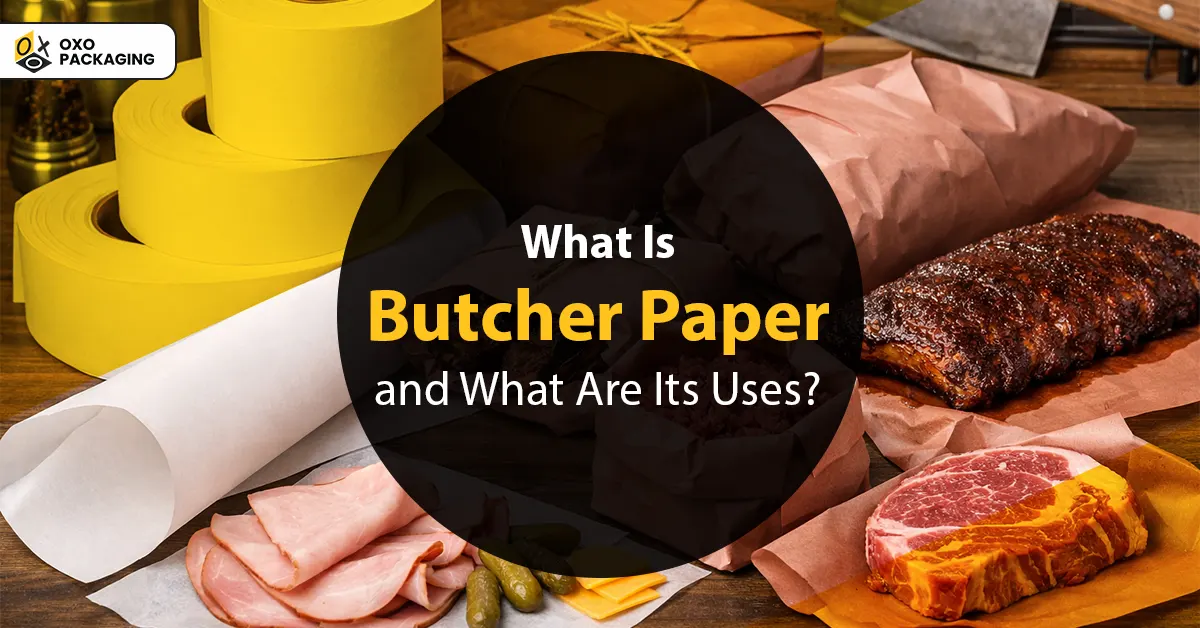
Whether you run a deli, a restaurant, or a butcher shop, you may face some issues like leakage and unwanted contaminants. And wondering about the root cause behind them. These issues are common when you choose standard food-safe paper rather than butcher paper.
Thinking about what is butcher paper and what are its uses? Worry not, this blog sheds light on it in detail. So keep reading till the end!
Rising Demand for Butcher Paper in the Market
Before exploring what is butcher paper, know its market scope. With the rising popularity of barbecue culture and increasing consumption of fresh meat products in Australia, the butcher paper market is more likely to grow to $1,929.8 million at a CAGR of 4.1% by 2035. So, investing in butcher paper helps your business attract more customers in the long run.
What is Butcher Paper?
Butcher paper is a thick, durable, moisture-resistant, and food-grade paper. It is designed for wrapping raw meat, poultry, and fish to prevent contamination and leakage while remaining breathable. The speciality of butcher paper is its ability to maintain a crispy bark for smoking meat, sandwiches, and crafts.
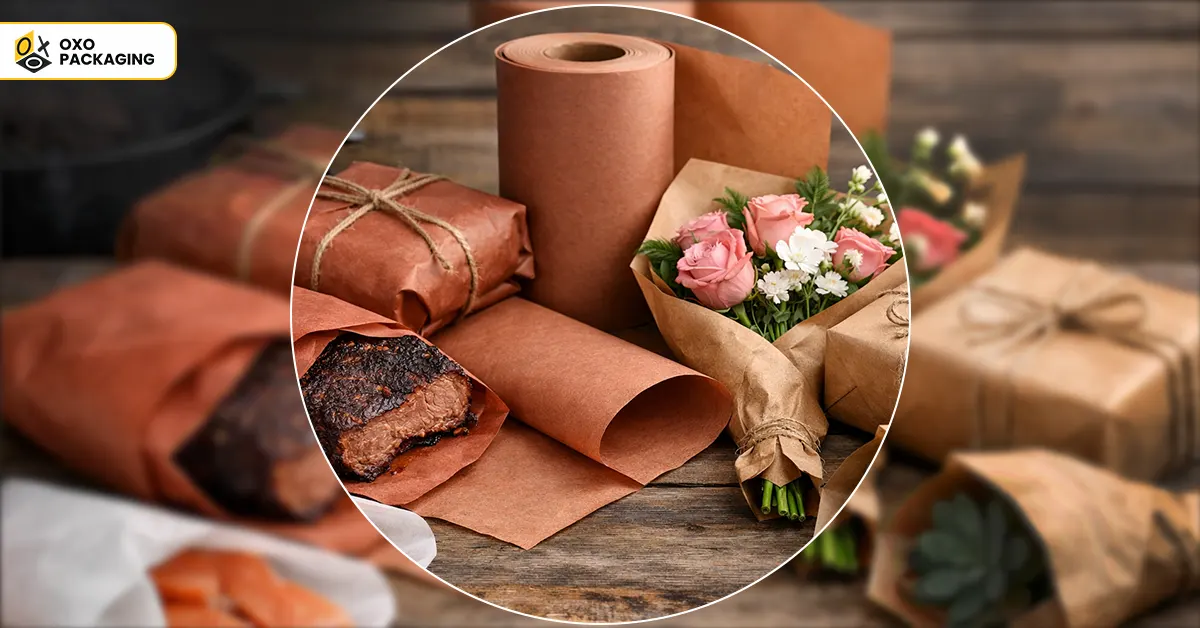
Unlike non-porous materials like plastic wrap or foil, butcher paper is breathable, which prevents meat from becoming soggy and allows steam to escape while smoking. Despite the popularity of this paper in the food industry, you can also use it for packing and shipping sensitive items like flowers, plants, and gifts. Let’s explore more about butcher paper:
Materials Used to Make Butcher Paper
Derived from kraft wood pulp, butcher paper is a growing preference for eco-conscious customers. Long and durable fibres from softwood trees like pine, fir, or spruce make butcher paper a strong and food-grade product. However, some chemicals are applied to this paper to achieve moisture resistance, making it ideal for wrapping meat without tearing.
What are the Types of Butcher Paper?
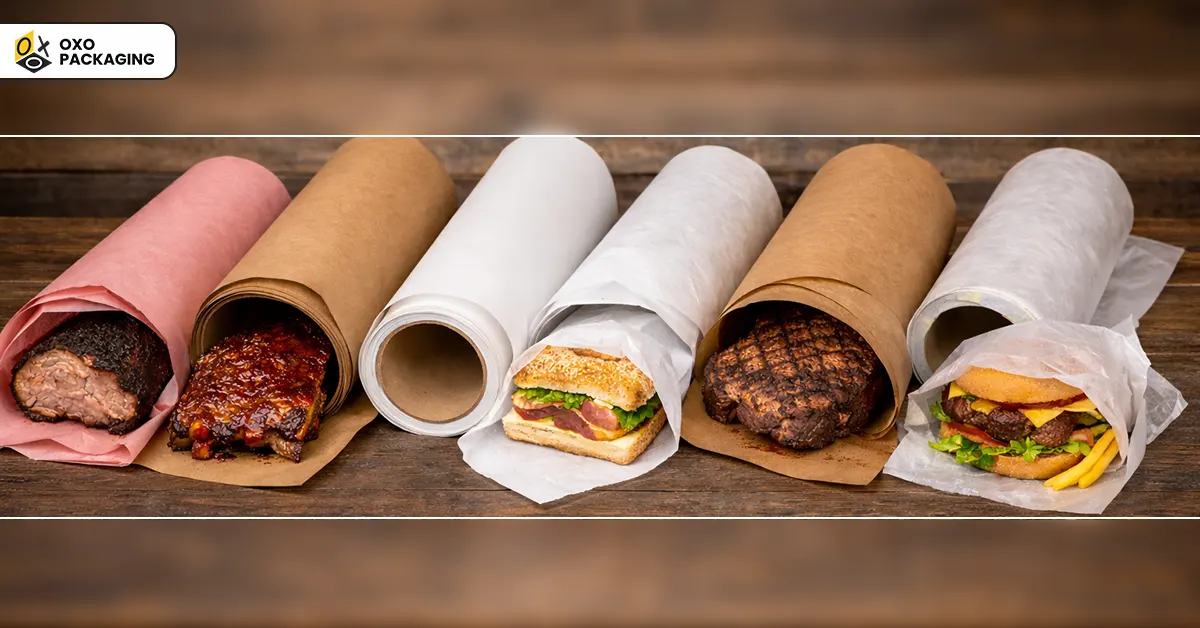
Butcher paper comes in three primary colours—pink (peach), white, and brown (kraft)—designed for food safety, moisture regulation, and protection against contamination. Pink is preferred for smoking meat to retain moisture, while white is often used for deli wrapping or table covers. Brown is the standard for general, heavy-duty packing.
Butcher paper comes in three primary colours: pink or peach, white, and brown (Kraft). All these types provide food safety, moisture regulation, and protection against contamination. But each type serves unique purposes, such as:
Pink Butcher Paper
Pink butcher paper is also known as peach butcher paper. It is unbleached and breathable while allowing steam to escape to prevent meat from becoming soggy while protecting it during long smokes. Takeout restaurants, delis, and butchers usually use peach butcher paper for wrapping and shipping barbecue.
Kraft Butcher Paper
Kraft butcher paper is also known as brown butcher paper. It is an eco-friendly, unbleached and cost-effective option for wrapping, storing, and shipping fresh dry foods. Kraft butcher paper is durable, food-grade, moisture-resistant and often unbleached, designed for butchers and BBQ enthusiasts. It traps smoke during cooking while allowing meat to breathe with its porous nature.
White Butcher Paper
White butcher paper is a durable, bleached, and FDA-approved kraft paper used primarily to wrap raw meats, fish, and deli sandwiches. It is uncoated or lightly waxed, allowing it to be breathable while resisting moisture and grease. It is popular for smoking meats to preserve bark, as well as for crafting and table coverings.
Apart from colour, butcher paper has three types depending on its coating, treatment, and intended use, which affect its moisture resistance, breathability, and strength. The main types include:
Poly-Coated Butcher Paper
Poly-coated butcher paper is often referred to as freezer paper. It is a durable, food-grade paper with a polyethylene (plastic) coating applied to one or both sides. It acts as a moisture and vapour barrier to prevent freezer burn and leakage, making it ideal for storing meat, wrapping food, or lining baskets.
Steak Butcher Paper
Steak butcher paper is a food-grade, moisture-resistant, and heavy-duty kraft paper used for wrapping, storing, and smoking meats. Unlike plastic wrap, it is breathable, allowing moisture to escape, which preserves the crust (bark) on barbecued meats while protecting food from contaminants.
Waxed Butcher Paper
Waxed butcher paper is a durable, moisture-resistant, and greaseproof paper coated with wax or polyethylene on one or both sides. Designed for food service, it acts as a vapour barrier to prevent leaks, making it ideal for wrapping fresh meats, deli items, or oily foods. It is primarily used for storage and cold, moist applications, not for high-heat cooking.
Explore Key Uses of Butcher Paper
From wrapping, storing, and smoking meats to food service presentation and crafting, butcher paper has versatile uses. Have a look at their major applications:
Packing Material
Butcher paper is a versatile, durable, and eco-friendly packaging material commonly used for protecting fragile items during shipping, such as glassware and home decor. It acts as an excellent, ink-free void filler to prevent movement in cartons and serves as a sustainable, recyclable inner wrap for apparel and retail products.
Smoking Meat
Pitmasters use peach or pink butcher paper to wrap briskets, ribs, and pork shoulders during the final stages of smoking to retain moisture while allowing the meat to breathe, preventing a soggy bark. Unlike aluminium foil, which steams meat, butcher paper allows smoke to penetrate while keeping the meat juicy. Wrapping cooked meat in butcher paper keeps it warm and allows it to rest before serving.
Food Storage and Handling
Many butchers use butcher paper to wrap poultry, fish, and meat for short-term storage, offering protection against contaminants. Its breathable structure helps keep meat fresh, as it is less likely to trap excess moisture compared to plastic wrap.
Food Service and Presentation
Deli and restaurants often use butcher paper to wrap sandwiches, subs, and burritos while providing a sturdy, rustic, and often brandable wrapper. They also line food baskets with this paper to add a rustic, casual look, particularly for fried foods, BBQ, or seafood.
Arts and Crafts
Apart from food packaging and wrapping, butcher paper is ideal for use in large-scale murals, sketching, and protective covering. Its strong, often thick, and non-bleeding nature makes it ideal for crayons, markers, paints, and papier-mâché, often acting as a canvas for school projects or DIY decorations.
Main Pros of Butcher Paper
Key advantages of butcher paper include superior fat resistance, moisture management, cost-effectiveness, and eco-friendly, biodegradable, and recyclable properties for safe food handling and storage. Other benefits are:
. Maintains Bark and Texture: Retain bark and texture on smoked meats, such as brisket, by being semi-permeable, which allows for a balance of moisture retention and steam release.
. Breathable Yet Protective: Unique, uncoated, and porous kraft pulp construction allows steam to escape while still acting as a durable, grease-resistant shield.
. Durability: The wood pulp is processed to maintain high-strength cellulose fibres, making the paper exceptionally tear-resistant.
. Versatility: Beyond the kitchen, its durability makes it effective for crafting, gift-wrapping, and as disposable table covers, offering a functional, eco-friendly solution for both residential and industrial use.
. Eco-Friendly: Uncoated, brown butcher paper breaks down naturally, reducing landfill waste. It can be safely added to compost systems, especially if it hasn't been heavily soiled with grease.
. Heat Resistance: It generally handles temperatures up to 450 degrees centigrades, but is best used for smoking or low-heat, long-cooking applications.
Factors to Consider While Choosing Butcher Paper
- Always ensure the paper is 100% FDA-approved for direct food contact.
- Unwaxed paper is best for smoking and grilling because wax can melt.
- Unbleached (brown) paper is generally preferred for food as it contains fewer chemicals.
- Suitable for high-volume, professional, or home use, with common widths of 18 or 24 inches.
- Select paper with high wet-strength, often enhanced by starch treatment, to handle raw, juicy meats without falling apart.
Where to Find Well-Customised Butcher Paper?
If you want to leverage butcher paper to enhance your branding and customer experience, seek specialised online packaging suppliers like OXO Packaging. We offer personalised designs, food-safe materials, and custom sizing with options for small or large wholesale orders.
Butcher paper is a versatile, heavy-duty, and FDA-approved Kraft paper primarily used for smoking, storing, and wrapping meats to retain moisture while preserving the exterior "bark".
In Australia, butcher paper is commonly referred to as butcher's paper, butcher paper, or specifically for BBQ, pink butcher paper.
The best substitutes for butcher paper include parchment paper, aluminium foil, and kraft paper, which all help manage moisture and heat during cooking or smoking.
Pink and brown butcher paper are both unbleached, food-safe, and breathable, but pink (or peach) butcher paper is generally thicker, smoother, and treated to stay strong when wet